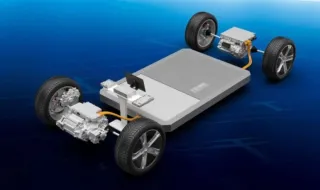
A key stage in the evolution of electric vehicles is the transition to solid-state traction batteries, which promise increased energy storage density and reduced charging time. BYD, the world's largest electric vehicle manufacturer, promises to introduce its first model with a solid-state battery next year.
BYD started its activities as a manufacturer of lithium-ion batteries and remains second in the global market, after CATL. Its ability to equip electric vehicles with its own traction batteries has helped BYD become the largest supplier of this type of transport.
In an interview with Carwow in Spain, BYD Executive Vice President Stella Li indicated that the company is also making steady progress in the production of solid-state traction batteries. According to her, BYD is studying all possible types of traction batteries in its laboratories and is engaged in specialized research. “When it comes to solid-state batteries, BYD is leading the way, both in terms of commercial production and technology. To prove this, we will launch a model next year that will be the first to adopt this technology,“ admitted Stella Li.
A subsidiary, FinDreams, plans to use an inorganic solid-state electrolyte based on lithium thiophosphate with added chlorine (LPSCl). Prototype battery cells with capacities from 20 to 60 Ah are capable of achieving energy storage densities of 400 Wh/kg. In laboratory conditions, sulfides provide high ionic conductivity, but scaling up production of this type of battery has so far been problematic. In addition, during operation, traction batteries are exposed not only to extreme temperatures but also to vibrations, and the design of battery cells must take this into account.
Competitors are also not idle. Toyota plans to launch electric vehicles with solid-state batteries in 2027-2028, while Samsung SDI plans to start mass production of such batteries in 2027. According to the management of the Chinese company FinDreams, the company will be able to produce approximately 1,000 solid-state batteries next year, but mass production will not begin until 2030. The first electric vehicles with such batteries are likely to appear in the ranges of premium brands such as Denza and Yangwang, as this will make it easier to justify their higher price. In addition to the new equipment, the cost of producing solid-state batteries is increasing due to the cost of the materials themselves. BYD is also participating in a government-funded program to develop solid-state batteries. According to BYD experts, solid-state batteries will coexist on the market with traditional lithium-ion batteries for 15 to 20 years, and the migration process will not be fast.