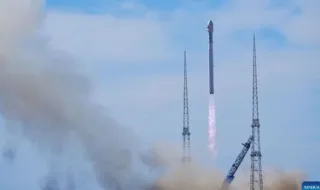
China's response to the Starlink space network is gaining momentum thanks to the entry of private capital into the sector. The Zhuque-2E Y7 launch vehicle, built by the LandSpace company, successfully launched from the Juquan spaceport. The two-stage vehicle launched 10 satellites of the SpaceSail broadband network, also known as Qianfan, into the planned orbit. The flight became the first mass launch of elements of this national constellation system undertaken by a private company instead of state structures.
The new Block 2 variant of the Zhuque-2E rocket significantly upgrades the standard model. With a height of nearly 56 meters and a launch weight of 267 tons, the machine relies on an environmentally friendly fuel pair of liquefied methane and liquid oxygen. The first stage is powered by four TQ-12A rocket engines with a total thrust of 3312 kN, and the second stage is powered by the TQ-15A power unit. The design allows for a payload of six tons to low Earth orbit and four tons to sun-synchronous orbit.
One of the key engineering advances in the rocket system is the use of supercooled fuel components. This increases the density of methane and oxygen, providing a higher capacity without increasing the physical size of the tanks. The second stage now also has the ability to be fired three times – first for entering orbit, second for corrections and third for controlled deorbiting after launching the satellites, in order to limit space debris.
The mission carried out is the 15th in a row for the SpaceSail satellite constellation. With the launch of the new batch, the number of devices in orbit exceeds 240 units. The Zhuque-2 rocket, which in 2023 made history as the first methane rocket to reach orbit, is moving from the test phase to mass servicing of satellite networks.
Up until now, the project has been deployed mainly by the state-owned CASC corporation and its Long March launchers. The entry of private aerospace companies aims to drastically accelerate the pace so that China can compensate for the lead of the American Starlink network. In parallel, the country is actively developing technology for the reuse of launch vehicles, which will further reduce the costs of future launches.