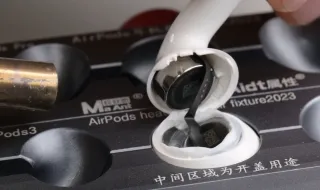
The wireless audio industry has long been driven by a strict philosophy of using disposable components, which leaves consumer electronics technicians little room to maneuver when the internal batteries inevitably wear out. For a decade, teardown experts at iFixit routinely gave each generation of Apple's iconic wireless headphones a repairability score of zero out of ten, due to the heavily glued housing assemblies and sealed lithium batteries. However, a thorough engineering “autopsy” of the newly released AirPods 5 reveals a surprising structural change beneath the polished exterior, ushering in a subtle design evolution that breaks with that decade-old tradition.
A look at the microscopic architecture of the latest hardware reveals that Cupertino engineers have quietly returned to internal battery connections with pins, rather than relying entirely on permanently bonded power modules. This mechanical modification means that technicians can theoretically remove and replace a dead battery without completely destroying the surrounding plastic housing – a small structural triumph that earned the AirPods 5 a historic repairability score of 2 out of 10. Despite this welcome turn to repairable hardware, accessing these internal components remains an extremely tedious procedure, requiring precise temperature control, specialized clamps, and careful application of hot air to soften factory adhesives.
Even with the introduction of modular contact pins, the overall assembly remains a tightly packed maze that is far from a DIY-friendly configuration. Independent verification confirms that the internal batteries have opposite polarities for the left and right channels, meaning that components cannot be interchanged arbitrarily between the two sides. While the 2 out of 10 rating may seem modest in the showroom, it marks a significant conceptual shift for a product category that was previously designed with planned obsolescence in mind, leading industry analysts to wonder whether other major tech brands will follow suit and make sustained hardware support an industry standard.