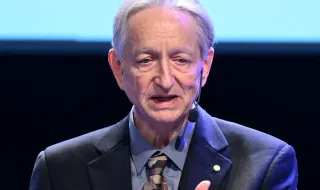
Geffrey Hinton, one of the scientists who laid the foundations of modern artificial intelligence, has warned that technology could create “alien beings“ - systems that are more intelligent than humans. According to him, society has only a few years to adapt to a world in which humans will not be the only intelligent species.
“The reality is that we are creating beings of another species“, Hinton said in an interview with “The Guardian“. According to him, big tech companies insist that artificial intelligence should become increasingly intelligent, without paying enough attention to the other characteristics of the systems they create.
A warning, not an accurate prediction
Hinton estimates a 10-20% chance that artificial intelligence will cause the extinction of humanity in the coming decades. He specifies that this is not a specific prediction of a future event, but a way to show the scale of the risk.
The scientist rejects the argument that uncertainty justifies waiting. "The unique problem with AI is that if things go wrong, if it takes control, there's no second chance," he said.
Nvidia CEO Jensen Huang dismissed Hinton's assessment. He said the number was not based on scientific research and that such warnings were harmful. Huang called for decisions about the future of the technology to be based on evidence and scientific data.
Criticisms of Trump and self-regulation
Hinton called Donald Trump a "corrupt, senile criminal" and said the US president's use of the term "superintelligence" showed he understood "almost nothing" about it. of artificial intelligence.
According to Hinton, "superintelligence" has a clear technical meaning - a system that is more intelligent than humans. He criticizes Trump's attempt to use the term as a general term for artificial intelligence.
The scientist also opposes the idea of the technology sector setting its own safety regulations. He compares this to the ability of oil, asbestos and tobacco companies to draw up their own warnings about the risks of their products.
From technology pioneer to its critic
Hinton has worked for years on neural networks - computer systems that learn to recognize patterns in data, rather than just following predefined rules. In 2012, he and his students created an image recognition program that was significantly ahead of its competitors.
The same year, Google acquired Hinton's company DNNresearch for $44 million. Neural networks later became the basis of models developed by leading companies in the sector.
Hinton will leave Google in 2023 to be able to speak freely about the risks of artificial intelligence. He is a winner of the “Turing“ Award, which he received together with Joshua Bengio and Yann LeCun, as well as the Nobel Prize in Physics.
According to him, countries have a common interest in sharing knowledge about the safe development of the technology, because no country would want artificial intelligence to get out of control in another country.
Sources: theguardian.com