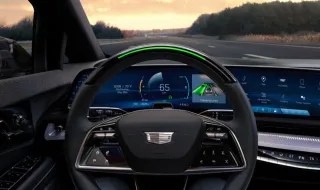
Forgetting to press the gas pedal on a long highway trip once required constant concentration and millimetric monitoring of traffic. Today, however, modern cars are able to judge the distance themselves, reduce speed to a complete stop in a traffic jam and start again, freeing the driver from tension. Behind this miracle of comfort is one of the most intelligent technologies in modern automotive engineering - adaptive cruise control, often called ACC.
Unlike standard autopilot, which only maintains a preset fixed speed, the adaptive system uses advanced radars located in the front bumper and artificial intelligence quarries behind the rearview mirror. These sensors constantly scan the road hundreds of meters ahead, calculate the speed of the vehicle in front and maintain a safe distance. If the vehicle in front slows down, the car automatically takes off the gas or applies the brakes, and when the road clears, it smoothly restores the originally set pace.
This technology not only saves energy on long journeys, but also plays a key role in road safety. It eliminates the risk of sudden collisions caused by momentary inattention or fatigue, and prevents the creation of artificial traffic jams on highways caused by sudden braking. In combination with lane keeping systems, adaptive cruise control turns every car into a semi-autonomous machine that makes travel smoother, safer and significantly more economical.
Technologically speaking, modern adaptive cruise control relies on continuous data exchange between millimeter wave radars with a range of up to 250 meters and high-resolution optical cameras that process thousands of calculations per second. Using advanced machine intelligence algorithms, the system filters static roadside objects from real road users and recalculates the driving trajectory in real time, providing precise modulation of brake pressure through electro-hydraulic modules and electronic throttle control.
The integration of this technology paves the way for fully autonomous driving from level 3 and above, where the sensor array is expanded with LiDAR sensors and ultrasonic sensors for full 360-degree coverage. The future of these systems is aimed at full V2X connectivity, allowing cars to communicate directly with the surrounding infrastructure and other vehicles to anticipate critical situations far beyond the visual range of on-board cameras.