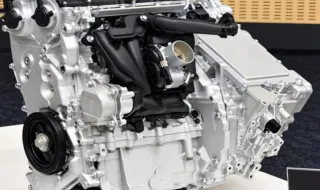
We have already informed you that the European division of Toyota has presented a large-scale technology strategy that envisages the introduction of a new generation of flexible platforms designed for electrified vehicles. This innovative architecture is designed with the idea of unifying different types of drives, including full hybrids, plug-in hybrids and all-electric models, providing a perfect balance between functionality and high efficiency.
The central place in this ambitious project is occupied by the completely new 1.5-liter four-cylinder internal combustion engine, which was created from scratch specifically for the needs of hybrid systems. The company's engineers have relied on a flexible concept, thanks to which the unit will be available in both a naturally aspirated and turbocharged version. The strategic plan envisages the naturally aspirated modification to replace the current 1.8-liter engine, providing the same or better dynamic performance in significantly more compact dimensions.
In addition to the engine itself, an engineering team has also developed a whole range of new, lighter and more compact electrical components, including electric motors and control units. Their optimal integration into the overall design of the car allows for a drastic reduction in mechanical and electrical losses. As a result of these improvements, combined with improved aerodynamics and a lower silhouette of the body, Toyota has set itself the goal of achieving over 15% higher fuel efficiency.
The compact dimensions of the new powertrain give designers significantly greater freedom in shaping the exterior lines and reducing frontal resistance. At the same time, the common platform allows production facilities to flexibly adapt the volumes of different types of drives to current market trends and consumer demand.
Despite its compact dimensions, the new powertrain impresses with the implementation of modern silicon carbide semiconductors in the inverters and control units, which minimize energy losses. Engineers have achieved a significant reduction in internal mechanical friction and optimization of thermal management, and the entire architecture is pre-configured for the possibility of working with renewable and carbon-neutral fuels, expanding the ecological potential of the conventional drive.