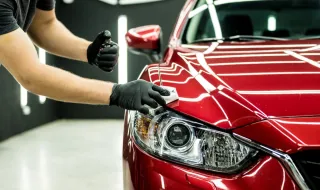
Summer and autumn trips often leave traces on the front bumper and windows in the form of dried insects and drops of tree sap. Trying to scrape them off mechanically with a sponge or fingernail is guaranteed to damage the paintwork, creating microscopic scratches and dull spots. Instead of expensive specialised products from automotive care stores, readily available household items offer a surprisingly effective and completely safe solution.
One of the gentlest and most proven methods for dealing with dried insects is to use ordinary household olive oil or cooking oil. Applying a small amount of oil directly to the affected area breaks down the organic protein within minutes, without affecting the car’s paint. After a brief wait, the surface is wiped with a soft cloth, while the residue is easily washed away with ordinary car shampoo.
When dealing with drops of sap from coniferous trees, the situation requires a slightly different approach, as oil is not sufficient here. Rubbing alcohol or isopropyl alcohol dissolves the resinous compounds extremely quickly. Soaking a cotton pad in alcohol and pressing it against the stain for half a minute softens its structure, allowing the adhesive to be easily removed with a gentle sliding motion, without unnecessary pressure.
An alternative and readily available household product is ordinary sparkling water, whose mildly acidic content helps soften mineral deposits and fly residue. Placing a cloth moistened with sparkling water over the bonnet or bumper for around ten minutes acts as an effective compress before washing. An important condition for all these procedures is that the car should be in the shade and the bodywork completely cool.
After cleaning is complete, the treated areas must be thoroughly rinsed with water and protected with a thin layer of quality wax or quick detailer. This restores the paint’s protective barrier and prevents new contaminants from sticking again quickly during the next drive.