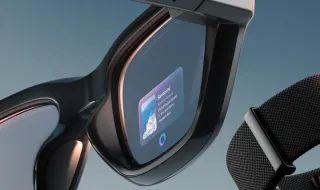
Apple’s first smart glasses will likely have a serious limitation even before they reach the market: they will work only in combination with a relatively new iPhone. According to Mark Gurman, the company is not planning to support Android phones, and the glasses will rely on the smartphone for a significant portion of their computing and access to apps.
The project is codenamed N50. Apple plans to unveil the device at the WWDC developer conference in June 2027, with shipments expected to begin before the end of the same year. These are internal plans, however, and they may change, as software and artificial intelligence development is still presenting challenges.
The glasses are designed with limited memory and computing power. That is why they will use the connected iPhone as the main hub for processing tasks, accessing apps and using Siri. The device will run a lightweight version of visionOS — the operating system originally developed for the Apple Vision Pro headset. Prototypes use a processor based on older Apple Watch chips. This allows for a more compact design, but at the same time limits the glasses’ ability to operate independently. The glasses are expected to have no display and to be controlled primarily through voice commands. Users will be able to ask Siri about a particular landmark, receive directions, translate signs and menus, and interpret conversations.
Other planned features include receiving notifications from the iPhone, sending and replying to messages, making calls, controlling music, creating reminders and working with the calendar. Control over compatible smart home devices is also planned. The App Intents framework will play a key role. It allows developers to add actions from their apps to Siri. This would enable users, for example, to order a ride, make a reservation or purchase a ticket using a voice command, without directly using the phone’s screen.
Mark Gurman believes that some lighter functions could work over Wi-Fi even when the iPhone is not immediately near the user. This may apply primarily to audio playback. It is not clear, however, how many of the core capabilities will remain available without the phone.
In this way, Apple is betting not on fully standalone glasses, but on a device that expands the capabilities of the iPhone. The approach could make it easier to use apps from the company’s ecosystem, but at the same time it will exclude Android users and make the purchase dependent on having a compatible smartphone. Apple has yet to officially announce a price, detailed technical specifications or a final launch date.