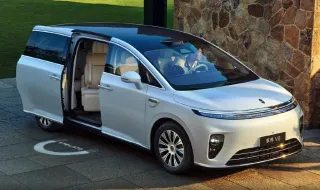
Behind the wheel of today’s modern flagships, electronics have long been doing more than half the work. Now, however, the boundary is moving a step further after Stelato officially announced the start of road tests for Level 3 autonomous driving on intercity highways. The project is being developed by the joint venture between BAIC and Huawei, while the flagship Stelato V8 minivan is taking on the role of a laboratory on wheels at speeds of up to 120 km/h. This threshold turns the test into something of a watershed moment, as it is the first time an autonomous driving system has been evaluated on highway routes at such speeds.
The real difference compared with mass-market Level 2 systems becomes apparent when the electronics take over: with Level 3 mode activated, the driver may temporarily stop keeping a constant eye on the road, but remains obliged to take back control when prompted by the system. This fine line between automation and responsibility often makes engineers count to one hundred before putting a vehicle into busy traffic. That is precisely why the vehicle first went through testing on closed tracks before setting foot on real asphalt.
Under real-world conditions, the tests are by no means limited to cruising steadily in the right-hand lane with perfect visibility. The scenarios include vehicles stopped in the lane, dense and slow-moving traffic, sudden braking ahead, as well as entering and exiting highways. Such situations place the sensor suite and response algorithms under serious pressure when road conditions change within fractions of a second.
The project’s hardware foundation is based on the Huawei Qiankun ADS 5.0 suite, built around a total of 38 sensors, including four lidar units. The roof-mounted lidar provides a detailed view of the surrounding environment, while the entire setup is supplemented by eight primary backup safety systems. Ultimately, such an architecture shows that autonomous driving at high speeds requires not just bold claims, but also extensive redundancy across critical circuits.