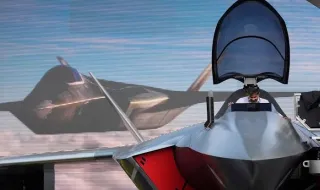
Uncrewed fighter jets will begin flying in UK airspace in 2027. This was stated by the head of the Royal Air Force, Sir Harv Smith, who described autonomous systems and artificial intelligence as the biggest change facing military aviation.
“I firmly believe that uncrewed aircraft operated with the help of artificial intelligence will change military aviation as profoundly as the transition from propeller-driven aircraft to jets,” Smith said.
The last crewed fighter jet
His comments relate to Britain’s participation in the Global Combat Air Programme – GCAP. The joint project with Italy and Japan is developing a sixth-generation fighter jet known as the “Tempest”. The aircraft is expected to enter service around 2035.
According to Smith, this aircraft could turn out to be “the last crewed fighter jet” that the United Kingdom will build. He clarified that this does not mean abandoning the human factor, but rather changing the way combat aircraft will be used.
“The GCAP fighter could be the last crewed fighter jet we ever build – not because people will become less important, but quite the opposite,” Sir Harv Smith said.The future structure of the RAF will combine the existing “Typhoon” and F-35 aircraft with autonomous systems. This will allow crewed aircraft to operate alongside uncrewed platforms in reconnaissance, electronic warfare and the execution of higher-risk combat missions.
Uncrewed platforms alongside crewed aircraft
The United Kingdom is already developing the concept of autonomous “wingmen” – uncrewed aircraft that operate alongside a crewed fighter jet. They can be used for surveillance, jamming enemy systems or carrying out strikes without anyone on board.
The RAF also operates the remotely piloted “Protector” aircraft. The machine is approximately 11 metres long, can remain airborne for around 40 hours and carry “Brimstone” missiles and “Paveway” precision-guided bombs. It is controlled from the ground, including from RAF Waddington in Lincolnshire.
Smith stressed that the development of autonomous systems must not eliminate human responsibility.
“Artificial intelligence and machines should take on the most dangerous tasks instead of people, but technology must improve human judgement, not replace responsibility,” he said.The first flights by uncrewed fighter jets in UK airspace in 2027 will be an important step towards this change. They will not mean the immediate disappearance of crewed aircraft, but rather the beginning of a mixed model in which people and autonomous machines operate within a shared combat system.
Sources: the-independent.com, news.sky.com, theguardian.com