The energy sector has long been searching for a reliable and safer alternative to lithium-ion batteries, particularly for stationary electricity storage systems. A team from University College London has presented an aqueous zinc-iodine battery that retains almost all of its initial capacity after thousands of charge and discharge cycles in laboratory tests. Such a result sounds promising against the backdrop of growing demand for renewable energy storage, although the path from the laboratory to mass production is still ahead.
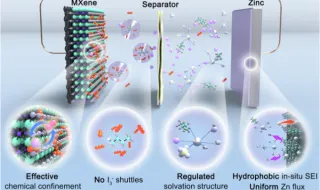
The scientists’ key breakthrough lies in the composition of the new electrolyte, which changes the way the chemical reaction takes place. While traditional iodine batteries involve active iodine compounds exchanging two electrons, the new formula stabilizes iodine’s reactive forms and allows them to transfer four electrons. In practice, this means that significantly more energy can be extracted from the same amount of active material, without resorting to complex and expensive designs.
Until now, stabilizing iodine often required concentrated solutions containing halogens, which proved expensive and highly corrosive. The University College London team has chosen a more precise approach in which the different components of the mixture divide the tasks between them – some limit the water’s access to the iodine, while others bind the active compounds and prevent unwanted side reactions. What a clever solution to an old problem in electrochemistry, where water is both an advantage for safety and a challenge for the stability of the reaction.
The tests were conducted on both flat pouch cells and small cylindrical cells, and the technology demonstrated stable operation in both formats. The researchers’ next step is to examine the performance of larger modules under conditions as close as possible to the real-world environment of large energy installations. If these tests confirm the laboratory data, zinc-iodine batteries could play a significant role in storing electricity from solar and wind farms.