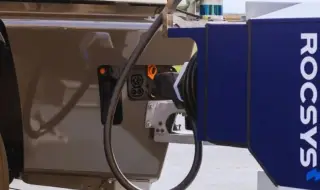
Rocsys and Einride have successfully tested a fully autonomous system for charging unmanned electric trucks. The tests were conducted at the AstaZero test site owned by the Swedish research institute RISE as part of the large-scale MODI project, which is co-funded by the European Union. This project is part of the effort to create scalable and sustainable freight transport solutions that meet the latest environmental standards and mobility challenges.
The essence of Rocsys technology is that vehicles can be charged automatically without any human intervention. By using robotic platforms compatible with open standards, the system allows fleets of various types of electric trucks to be serviced. This ensures not only high efficiency, but also flexibility of the solution within different logistics infrastructures. In addition to the technical side, an important addition is the Rocsys platform Portal, which provides continuous monitoring and management of the charging process 24/7, which is of critical importance for commercial operators.
Special attention is paid to the issue of safety. Reducing or completely eliminating the need for personnel intervention significantly reduces risks in the workplace, which is especially relevant in industries where work is carried out in an environment with increased danger. As noted by Einride Manager Pia Vik, partnerships with technology leaders in the industry make logistics not only more efficient, but also more environmentally friendly. The AstaZero proving ground itself, designed to test autonomous transport in conditions close to real-world conditions, provided the necessary infrastructure for comprehensive testing of innovative technologies.
Both Rocsys and Einride are convinced that this successful experiment will be an important step towards the large-scale implementation of autonomous trucks in Europe and beyond. Autonomous charging technology not only minimizes downtime, but also promotes the transition to renewable energy sources, fully responding to global trends in the decarbonization of the transport sector sector. According to representatives of both companies, this collaboration is an example of how the synergy between innovation and sustainable solutions can shape new standards in the field of future mobility. In other words, driverless trucks will be charged at stations without personnel. See more.