EU countries still import large quantities of oil and gas from Russia. The halt to this trade must be accelerated, Ursula von der Leyen announced. But how will Brussels convince Hungary and Slovakia to give up Russian oil?
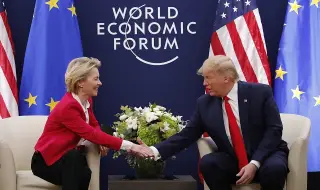
European Commission (EC) President Ursula von der Leyen announced an initiative to more quickly stop all European oil and gas imports from Russia after a conversation with US President Donald Trump. Russia's war economy is financing the bloodshed in Ukraine and is supported by revenues from the sale of fossil fuels, she wrote on social media. To put an end to this, the EC will propose accelerating the withdrawal from Russian fossil fuels. Von der Leyen did not give any details on exactly how this would be done.
The current EU concept from June stipulates that no gas will be imported from Russia into the community of states from 2028 onwards (in 2024, supplies from Russia accounted for 19 percent of total EU imports, according to EC data). According to previous plans, oil imports should be completely stopped by the end of 2027. Despite a significant drop in imports since the start of the war, 13 million tons of Russian crude oil reached the European market in 2024. Hungary and Slovakia are the largest importers.
Trump links sanctions to the cessation of energy imports from Russia
Trump is demanding that European partners stop buying Russian oil before the US imposes . But since he included Turkey, a NATO member, in the bill, it is unclear whether an EU initiative will be enough. Turkey imports energy from Russia in bulk at bargain prices and has so far shown no signs of changing that quickly.
The topic of the phone call between Trump and von der Leyen was increasing economic pressure on Russia. The Commission President confirmed that a proposal for the 19th package of EU sanctions, which will be aimed primarily at Russian banks and the energy sector, as well as the use of cryptocurrencies to circumvent sanctions, will be presented soon. The Commission is expected to present its proposal for such a package to EU countries this week.
Last week, von der Leyen said that the Commission was also exploring other measures against the so-called Russian "shadow fleet" and third countries.