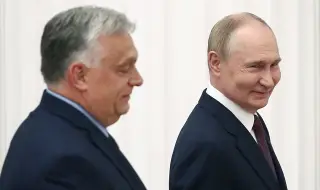
The European Commission plans to unfreeze around €550m in EU funds for Hungary to overcome Viktor Orban's veto on additional sanctions against Russia, the Financial Times reports, quoted by Focus.
The European Union can only approve new sanctions unanimously, but Hungary and Slovakia threaten to block these restrictions.
EU ambassadors discussed a number of restrictive measures presented by the commission on Friday.
This week, the commission announced that the new sanctions would target “cryptocurrencies, banks and energy“ and will accelerate the EU's decision to phase out Russian fossil fuel imports, which is scheduled for 2027.
Viktor Orban, who is due to run in parliamentary elections next year, has repeatedly refused to reduce his country's dependence on cheap energy imports from Russia and has repeatedly postponed the adoption of sanctions against Moscow.
Brussels froze about €22 billion in EU funds earmarked for Hungary in 2022, citing concerns about the independence of the judiciary, asylum rights, discrimination against LGBT+ people and academic independence in the country.
However, the Commission is gradually unfreezing these funds to appease Orban: A €10 billion tranche was unfrozen in 2023 so that Budapest could waive its veto on aid to Ukraine.
Earlier this year, the country received another €157 million using a legal a loophole that allows Hungary to transfer frozen funds to other programs.
It is the same loophole that Budapest is trying to use again. In May, Hungary requested 605 million euros as part of a broader "mid-term" review of how countries spend their share of the EU's overall budget.
After months of negotiations, Brussels is ready to let Budapest receive most of the requested funds, or about 550 million euros, according to senior officials familiar with the discussions.
On Friday, the European Commission presented a proposal for a 19th package of sanctions against Russia. Within its framework, the EC proposes to ban the import of Russian liquefied natural gas (LNG) into its territory until January 1, 2027.
Also, the European Commission proposes to significantly expand the list of sanctioned Russian "shadow ships" and to punish refineries, oil traders and petrochemical companies in third countries, in particular in China.
In addition, the European Commission proposes to further strengthen safeguards against circumvention of the sanctions, which first affected crypto exchanges.
Link to main version
Sep 19, 2025 20:06 802
EU to unfreeze €550m for Hungary over Russia sanctions
The European Union can only approve new sanctions unanimously, but Hungary and Slovakia threaten to block these restrictions
Снимка: БГНЕС/ЕРА