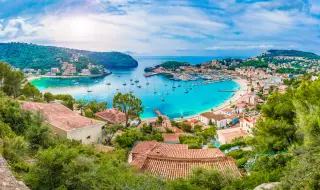
A kilometre-long line of rental cars winds its way through the winding roads in the heat. An army of tourists has set off for Valldemossa - the picturesque mountain village is one of the most popular destinations on the Mediterranean island of Mallorca.
For another year, the narrow mountain road has been a daily traffic jam. However, it is not just tourists who have suffered: a bus carrying mainly working people on their way to work has also been stuck in the traffic jam. "This is unbearable", grumbles one of them.
19 million tourists in the Balearic Islands
Although discontent with mass tourism in the Balearic Islands, as in other parts of Spain, has been growing for years and is expressed in protests, the islands are on track to reach a new record this year. Up to and including July, they have welcomed almost 11 million tourists, which is slightly more than the same period last year. For the whole of 2024, their number was 18.7 million. This year, it is likely to exceed 19 million - that is, approximately one in five tourists in Spain.
Despite the promising figures at first glance, the tourism sector in Mallorca is not in a festive mood. Restaurateurs, retailers and operators of tourist attractions are complaining of a significant drop in turnover. Their concern is precisely caused by German tourists. Their numbers have fallen dramatically over the past summer months compared to last year - by more than eight percent in July alone. Germans are traditionally the largest group of tourists in Mallorca. That is why many are worried.
Pedro Oliver, president of the island's Association of Tour Guides, is convinced that the protests are also to blame. "I have no doubt that they have had an effect: the message has been heard", he says.
Oliver and his colleagues see this in their daily work. "We are constantly asked by tourists whether it is true that Mallorca no longer wants tourists." Rafael Roig, president of the Association of Transport Entrepreneurs in Mallorca, has a similar opinion. "It's clear: if I hear that they don't want me in a place, I won't go there."
The economy and the heat also have an impact
Alvaro Blanco from the Spanish tourist office in Berlin doubts that Germans are really scared by the protests against mass tourism. In recent months, only two emails have been received from concerned German citizens on this issue. "I don't think the protests will have such consequences", he tells DW. More decisive in this case may be the dire situation of the German economy at the moment, as well as the increasing heat in southern Europe during the summer months. This may also repel some tourists, Blanco admits.
Carlos Sendra from the tourism consultancy Mabrian also sees things this way. However, he does not rule out the protests having long-term consequences: "We must prevent the perception that tourists are not welcome in the Balearic Islands", he says. Sendra also believes that the reasons for the decline in the number of German tourists are mainly economic. In this regard, he draws attention to the significant price increase associated with this recently.
Hotel prices put a strain on holiday budgets
In fact, the tourism sector in Mallorca has been deliberately focusing on improving quality for years. The best example of this is the improved hotel supply: in the last 20 years, the number of four- and five-star hotels has tripled, while those with one to three stars are disappearing from the market. This is putting a strain on tourists' holiday budgets. In addition, the Balearic authorities are focusing on diversification and are stepping up tourism advertising in the USA. This year, an unusually large number of French, Italians and Scandinavians have come, more than making up for the drop in German tourists.
Despite all this, Mallorca is on course for a new record. Although the regional government has repeatedly stressed that the limits of its capacity to accommodate holidaymakers have been reached, it has so far refrained from taking measures to restrict tourism. After much hesitation, it has never found the strength to raise accommodation prices, introduce a special tax on car rentals or impose stricter rules on holiday rentals. The dependence on tourism is too great, and the fears that such measures could reduce demand are too strong.
The protests will continue
That's why Jaume Puyol is convinced that nothing has really changed in Mallorca. "This summer was no different from the previous ones", says the spokesman for the platform "Less Tourism, More Life", which has organized a number of demonstrations against mass tourism. "This year too, the streets were crowded and the health system was overloaded. The logic of growth remains unchanged."
That's why he is announcing new protest actions. "The topic remains relevant", says the man. And next year there will certainly be demonstrations again.
Author: Jonas Martini