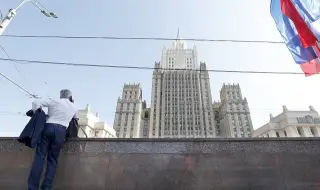
Russian President Vladimir Putin issued a decree to start the semi-annual autumn cycle of military conscription on October 1. 135,000 Russian citizens will be drafted between October 1 and December 31 for 12 months of compulsory military service outside the zone of active hostilities in Ukraine. Russia conducts two cycles of conscription - in spring and autumn each year.
This is written by the Institute for the Study of War (ISW).
The autumn cycles have generally recruited fewer Russians than the spring ones, but the number of conscripts has increased in recent years. The deputy head of the Main Organizational and Mobilization Directorate of the Russian General Staff, Vice Admiral Vladimir Tsimlyansky, emphasized on September 22 that the upcoming cycle is not related to the war in Ukraine.
Tsimlyansky said that the conscripts will serve only on Russian territory and will not perform tasks related to the war. The Russian military command will begin sending conscripts to assembly points on October 15, and a third of the conscripts will receive specialized training in training units and at military bases.
Russian law prohibits the deployment of conscripts for combat operations, and Russian forces typically rely on conscripts for border security, including in the Bryansk, Belgorod and Kursk regions.
The participation of conscript border guards in combat operations during the Ukrainian incursion into the Kursk region has caused particular discontent in Russian society.
Russia has reduced defense and security spending in 2026 by about 200 billion rubles ($2.4 billion) compared to 2025, despite ongoing economic difficulties. Russian Finance Minister Anton Siluanov said on September 18, for example, that Russian authorities expect the share of Russia's oil and gas revenue financing the Russian federal budget to be around 20 to 22 percent in 2026, which Siluanov noted was a decrease from around 50 percent previously.
The Kremlin recently announced an increase in the value-added tax specifically to finance defense and security, which the Russian Finance Ministry says will generate around $14.2 billion in additional revenue in 2026.
The Russian government plans to increase funding for television propaganda - in line with increased restrictions on social media and internet access. The Russian opposition newspaper "Verstka" reported on September 29 that the Russian government plans to spend 106.4 billion rubles ($1.28 billion) on state television channels in 2026, a significant increase from the previously planned 69.1 billion rubles ($832 million) in 2025.
The US special envoy for Ukraine, General Keith Kellogg, acknowledged that Ukraine has permission from the US to carry out long-range strikes against Russian territory. Kellogg responded in a September 29 interview with Fox News when asked whether US President Donald Trump had authorized long-range strikes against Russian territory.
Ukrainian President Volodymyr Zelensky has requested US Tomahawk land-attack missiles (TLAMs).
Kremlin officials are trying to preemptively dissuade the United States from providing Tomahawk missiles to Ukraine. Kremlin spokesman Dmitry Peskov questioned on September 29 whether Ukrainian or American forces would launch Tomahawk missiles against Russia and questioned who would direct the Ukrainian strikes.
Peskov said the Kremlin needed to determine which forces would be involved before it could determine its response. Peskov sought to downplay the effect that the Ukrainian Tomahawk strikes could have on Ukraine's military effort, arguing that the Tomahawk missiles would not change the dynamics on the battlefield.
The pro-European Party of Action and Solidarity (PAS) won a parliamentary majority in Moldova's September 28 elections, as Kremlin-linked Moldovan politicians and Russian officials prepared to appeal the results and call for protests in the coming days. The PAS won 50.2% of the vote, securing 55 of the 101 seats in the Moldovan parliament.
Igor Dodon, a Kremlin-linked former Moldovan president, called on Moldovans to hold peaceful protests outside the parliament building in Chisinau on the afternoon of September 29.
The protests on September 29 were limited and peaceful, with about 300 people in attendance and lasting only about 30 minutes.
Dodon said on September 29 that the leaders of the Patriotic Bloc, which won 24.17% and 26 seats, did not recognize the results and would appeal.
Kremlin-linked Moldovan politician Ilan Shor told Russian state television channel "Rossiya 24" that his "Pobeda" electoral bloc, which Moldovan authorities have banned from participating in the elections, also does not recognize the results and plans to appeal.
Shor said the "Pobeda" bloc would discuss its plan with colleagues in the "next day or two" and then call for protests.
Kremlin-linked Moldovan and Russian officials have alleged electoral fraud and procedural violations to create the conditions for the appeal of the results and call for protests. Shor claims the elections were "obviously manipulated" and that Moldovan authorities intimidated ten to twenty percent of voters to prevent them from voting.
Kremlin spokesman Dmitry Peskov said on September 29 that "some political forces" in Moldova were declaring their disagreement with the election results and discussing possible electoral violations.
Peskov said that Russia could "confirm" that Moldovan authorities had "denied" hundreds of thousands of Moldovans living in Russia the opportunity to vote.
ISW continues to assess that the Kremlin was creating the conditions for potentially violent protests aimed at removing Moldovan President Maia Sandu from power after the elections.