Russia, once a rising military power in Africa, is now struggling to maintain its influence on the continent, the Wall Street Journal reports.
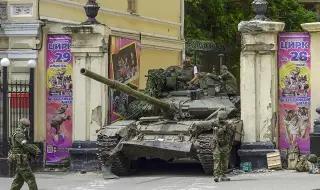
The Kremlin's new official mercenary force, the Africa Corps, has failed to replicate the financial success and political influence that the private Russian mercenary organization "Wagner" once enjoyed. Some of "Wagner"'s African ventures fell apart after 2023, when its founder, Yevgeny Prigozhin, rebelled against President Vladimir Putin and died when an explosive device blew off the wing of his plane.
Now, two years after the death of the mercenary group's leader, Moscow is struggling to maintain its presence on the continent, while several countries, including Mali, Niger and Burkina Faso, have begun to regret the expulsion of American and French troops over the past three years, accepting Russian help in the fight against "al Qaeda" and "Islamic State" rebels.
"They started asking for help – "especially the Malians," a senior US military official told the newspaper, adding that any future aid would be in the form of training local forces.
Pentagon strategists hope to further isolate the Russians and re-engage in West Africa on security issues.
One plan involves other countries, such as Morocco, training local armies to fight extremists. Prigozhin was once one of the most influential figures involved in the conflicts against Islamist rebels in the Sahel region.
"Russia's mission in the Sahel was in chaos even before the Wagner mercenaries were replaced by African Union troops." Nearly 11,000 people have been killed in the Sahel by Islamist insurgents in the past year, half of them in combat, according to data analyzed by the Pentagon-funded Africa Center for Strategic Studies. The rebels have already expanded their presence in countries near the Gulf of Guinea on the Atlantic coast.
The problems facing the African Union troops reveal the limitations of Moscow’s military capabilities, especially when its best units are fighting in Ukraine.
"A thousand "Wagner" mercenaries arrived in Mali in late 2021. The Malian government was paying $10 million a month to support the fight against the insurgents – a struggle that French and UN troops, aided by American advisers, have failed to win even after many years of effort, the authors of the article point out.
In Mali, brutal and uncoordinated attacks by Russian mercenaries on civilian settlements "created chaos and terror within the Malian military hierarchy," which discouraged potential informants from cooperating and created even more opportunities for jihadist recruitment. The "Wagner" troops had not been paid for months and were unable to seize Mali's valuable natural resources, particularly the vast gold reserves they planned to exploit.
The "Wagner" mercenaries left Mali in June, their reputations destroyed after they managed to stop the advance of Islamist militants and "committed atrocities against the civilian population," according to the publication.
"The failures of the "Wagner" group in Mali should serve as a warning to other regimes in Africa, showing that Russia is neither a reliable partner nor a quick fix for their problems," said the executive director of the US-based organization The Sentry, which investigates and combats multinational networks that profit from violent conflict, repression and kleptocracy.
Just a week after the arrival of African Union troops in Mali to replace the "Wagner" mercenaries, a convoy of soldiers was attacked in a desert area in the north of the country. Tuareg rebels, who sometimes fight alongside Islamist militants, destroyed half of the 40 armored vehicles traveling in the convoy and killed dozens of fighters, according to European officials.
In Sudan, the "Wagner" group mined gold in partnership with Mohamed Hamdan Dagalo, the rebel leader accused of genocide by the United States. After Prigozhin's death, Moscow sent more troops to guard the mines.
But the plan failed. Groups of militants blocked access to the mines, and Sudanese government warplanes bombed several of them. The Russian soldiers who were standing guard left the country in May, according to activists and locals. In Burkina Faso, a group of 300 mercenaries from the company "Urs" arrived in May 2024, but left the country just three months later to join the war in Ukraine.
A small group of Russian soldiers remained in the country to train local troops in the use of drones and protect the junta leader Ibrahim Traore. The problems Russia has faced have created a new opportunity for Western powers to return to the Sahel region, while the presence of Russian troops has become increasingly limited.
Link to main version
Sep 30, 2025 13:05 825
Putin's ambitious plans in Africa have failed miserably
In Sudan, the Wagner Group was mining gold in partnership with Mohamed Hamdan Dagalo, the rebel leader accused of genocide by the United States
Снимка: БГНЕС/ЕРА