What can and should the state spend and on what projects? The 2026 budget is being discussed in the Bundestag. The project of Vice Chancellor and Minister of Finance Lars Klingbeil has been discussed for about two months and should be approved by the deputies at the end of November.
One thing is clear: many ministries will have to work with a significantly reduced budget, because tax revenues are not enough to cover state expenses. At the same time, the liabilities are huge - Germany's debt was higher only during the coronavirus pandemic, the finance minister assured.
However, the Ministry of Transport does not fear that they will be affected by the budget savings measures, since the repair of depreciated infrastructure is the highest priority. For example, the government recently created a special fund for infrastructure and climate protection worth 500 billion euros, financed by loans.
Federal Minister of Transport Patrick Schneider actually expects his ministry to benefit significantly from this special fund. Transport arteries, i.e. roads, rails and bridges, are part of the infrastructure, and in Germany this is in poor condition.
Crumbling roads and bridges
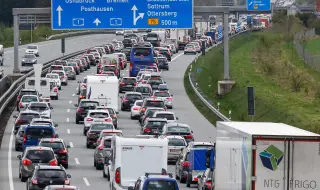
German motorways have a total length of around 13,200 kilometers. According to the Ministry of Transport, half of them are in poor condition. If federal roads are added to this, around 25,000 kilometers of roads need repair. The situation with motorway bridges is even more critical: around 5,000 bridges need urgent repair or must be rebuilt. The Deutsche Bahn railway network is in such poor condition that only every second train arrives on time to its final destination.
In fact, the Ministry of Transport has been allocated nearly 12 billion euros from the special fund for the current budget year, and in 2026 the amount will exceed 21 billion euros. But at the same time, the budget of this ministry has been reduced by 10 billion euros - to 28 billion euros, and the opposition accuses the finance minister of wanting to fill the holes in the budget with the billions saved. The government had promised that the credits from the special fund would be used exclusively for additional investments.
No new roads and expansions
The special fund cannot finance new projects and expansions, with the exception of bridges on highways that cannot be repaired. The usual budget is for this.
But according to Minister Schneider, his department's cut budget is no longer sufficient for such expenses. "We will be short by around 15 billion euros between 2026 and 2029," he estimates. 74 motorway construction and expansion projects and 99 federal road projects that are already planned will have to be stopped or postponed.
The Bundestag's budget committee asked the Ministry of Transport for a list of all affected routes. Schneider provided it and immediately added which constituencies they are located in. This way, every Bundestag member can see at a glance what the gap in financial planning means for him, his constituents and local citizens. The Transport Minister is clearly trying to put pressure on. "There is still a lot to catch up on in the current budget discussions", he said in an interview with the "Frankfurter Allgemeine Zeitung". "I would be happy if we received more funds for new construction and expansion."
But Finance Minister Klingbeil rejects this. In a letter to Schneider, he reminds him that the federal government has reached a consensus on the planned investments in transport and that Schneider himself has accepted the financial framework plan. No other area is being invested in more than in the transport sector. A total of 166 billion euros are planned for investment in transport by 2029. Klingbeil calls on Schneider to set his priorities and use the funds at his disposal effectively.
More public-private partnerships?
In the regions affected by the construction halt, there is great outrage. The provinces are demanding that the federal government continue to finance planned new construction and expansion projects. This is also demanded by the CDU/CSU parliamentary group in the Bundestag. When a debt of 500 billion euros has been taken on, it is difficult to explain that completed highway projects will now not be financed, commented the group's parliamentary secretary Steffen Bilger.
At a faction meeting, Chancellor and CDU leader Friedrich Merz promised that everything possible would be done to realize the maximum number of new construction projects. This will also be discussed with the coalition partners from the Social Democratic Party.
But the debate over new motorways and intercity roads will not be the only controversy in the budget discussions. Especially since the Federal Court of Auditors, which monitors how the state spends money, has urged the government to make greater efforts to save money. The federal government is living beyond its means, says a report on the 2026 budget. That is why there is a danger of entering a debt spiral.
Meanwhile, Chancellor Merz has proposed something new: "Public investment alone cannot cover Germany's needs and make up for the investment in our infrastructure that has been missed in recent years." There is great interest from private companies to invest in German infrastructure. "So it could also be about joint projects between the public sector and private investors. We are planning to launch larger projects with a public-private partnership together with the Ministry of Transport," Merz said.