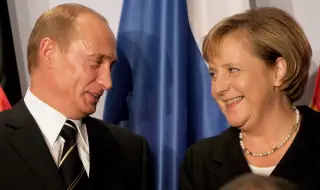
Former German Chancellor Angela Merkel has accused Poland and the Baltic republics of being to blame for the Russian invasion of Ukraine, drawing serious criticism, writes Focus.de.
The former chancellor said that she wanted direct EU talks with Putin in 2021, but resistance from Eastern Europe prevented this plan. Merkel sees the refusal of Poland and the Baltic states to negotiate with Vladimir Putin as an indirect contribution to Russian aggression.
According to Merkel in 2021 - a year before the full-scale Russian invasion of Ukraine, Putin “no longer took the Minsk Agreement seriously”. She wanted dialogue, but the Baltic states were against it.
“That didn't happen and yes, then I left my post and then Putin's aggression began. Today we won't be able to clarify what would have happened (in the other scenario)“, Merkel said. The former chancellor also cited the coronavirus pandemic as another factor, as personal meetings with Putin were not possible.
Merkel's statements were met with sharp criticism in Poland. Former Polish Prime Minister Mateusz Morawiecki accused her of damaging European security to a huge extent through her policy towards Russia. “With her ill-considered interview, Angela Merkel has proven to be one of the most harmful German politicians of the last century“, he said, quoted by The Telegraph.
Estonian Foreign Minister Margus Tsahkna described Merkel's statements as scandalous and untrue. "The reason for Russia's all-out aggression is Putin's inability to accept the collapse of the Soviet Union," the diplomat said.
"In our region, Russia's true nature was recognized early on and warnings were given about the dangers it poses. But most of the Western world chose to ignore this," Tsakhkna said. Under Merkel, Germany also misjudged the costs of economic cooperation with Russia and, with the opening of the Nord Stream gas pipeline, contributed to maintaining its energy dependence on Russia.