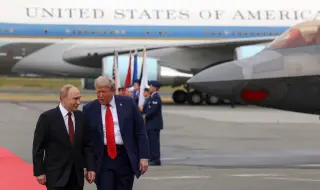
Many Ukrainians agree with US President Donald Trump's criticism of the Russia policy adopted by his predecessors. Like Trump, they believe that the excessive caution shown by both Barack Obama and Joe Biden has only served to embolden Vladimir Putin. This shared view led to a surprising degree of optimism in Ukraine when Trump returned to the White House, despite his perceived ambivalence towards the country, writes The Atlantic Council.
Since then, much has happened that has cooled Ukraine's initial enthusiasm. Instead of taking a hard line on Putin, Trump spent much of 2025 trying to win the Kremlin dictator over, offering him generous peace terms while pressuring Kiev to make painful concessions. Putin responded by ramping up his invasion. This included new large-scale offensives on the war fronts and a sharp escalation of bombing of Ukrainian cities.
With Trump’s patience clearly running out, there has been a notable shift in the United States’ rhetoric toward the Kremlin recently. The American leader has even begun to mock Russia, calling it a “paper tiger.” To force Putin to accept a peace deal, however, Trump will need to back up his increasingly harsh rhetoric with decisive action.
While Ukrainians are grateful for all the international support their country has received since the start of Russian aggression in 2014, there is also a strong sense that the democratic world has been too slow and hesitant in its efforts to deter the Kremlin.
For more than a decade, the West’s inadequate sanctions, limited military support for Ukraine, and apparent reluctance to risk escalation have been interpreted in Moscow as a tacit green light to move forward.
The weak response to Russia’s seizure of the Ukrainian peninsula of Crimea in early 2014 set the tone for everything that followed. Instead of uniting to oppose the first major seizure of European territory in the 21st century, Western leaders have urged Ukraine not to respond to Russia’s unprecedented attack and have even praised Kiev for its “restraint.”
This appeasement led directly to Russia’s covert invasion of eastern Ukraine and ultimately set the stage for a full-scale invasion in 2022.
Trump is right to claim that Putin invaded Ukraine because he thought he would not face a strong response from the United States and its European allies. However, this has not yet led to a more assertive stance from the White House that is consistent with the current administration’s talk of “peace through strength.” Trump’s recent change in tone and his unprecedented criticism of Russia certainly send the right message, but Putin will not be impressed by words alone.
While Trump’s unconventional approach to diplomacy has disappointed many, he can boast a number of encouraging achievements. Most importantly, he has made Europe take its own security more seriously and has pressed European leaders to take greater responsibility for supporting Ukraine’s military effort. By agreeing to sell U.S. weapons to Ukraine through Europe, he has also created a potentially long-term format for stable and reliable arms supplies to Kiev.
Efforts to improve relations with Russia have been far less successful. While Moscow has been at pains to express its theoretical support for U.S. peace efforts, Putin has repeatedly tried to slow the process and buy time. In the meantime, he has continued to escalate the invasion. During Trump’s tenure, Russia has dramatically increased its drone and missile attacks on civilians in Ukraine, setting a new daily record in early September. In doing so, Putin has rejected Trump’s calls for peace and made it clear that he has no interest in ending the war.
Now there are indications that Putin’s reluctance to compromise has finally forced Trump to take action. His recent statement that Kiev could "return all of Ukraine to its original form" was widely seen as a significant shift in the United States’ stance. There have also been reports of more tangible changes in Washington, such as a growing willingness to expand intelligence sharing with Ukraine to allow for strikes deep inside Russia, as well as a possible delivery of Tomahawk missiles.
Kiev and Moscow will be watching closely to see if these developments signal the beginning of a more fundamental shift in the Trump administration’s efforts to broker a peace deal.
One key sign would be Trump’s willingness to provide Ukraine with longer-term indications of his support. This applies to both U.S. arms supplies and security guarantees. So far, mixed messages from the White House on these key issues have encouraged Putin to believe that he can ultimately outlast the West in Ukraine.
The American leader could also increase pressure on Russia’s allies and supporters through secondary sanctions and other economic measures. Since 2022, Russia has found a large number of international partners willing to help it circumvent Western sanctions. The obvious answer is to focus attention on the authoritarian alliance that supports Putin and helps finance his war machine.
To make any headway, Trump must convince Russia to take his calls for peace through force seriously. Moscow is currently betting that the United States will eventually tire of Ukraine and scale back its diplomatic efforts to end the war. This assumption reduces Russia’s willingness to accept a compromise peace, since Putin is confident that Ukraine will be too weak to resist without U.S. support. If Russia can be convinced, however, that Trump will not abandon Ukraine and is committed to ensuring the country’s long-term survival as an independent state, Putin will be more willing to engage in serious negotiations.
For more than half a year, Trump has been trying to lure Russia to the negotiating table with offers of favorable peace terms and attractive opportunities for cooperation. So far, he has received only empty promises and deadly escalations. Now is the time to speak to Putin in the language of power, the only language he truly understands and respects.
Link to main version
Oct 7, 2025 22:33 513
Trump's patience is running out! Washington is starting to speak the language of force
For more than half a year, the White House has been trying to attract Russia to the negotiating table with offers of favorable peace terms and attractive cooperation opportunities
Снимка: БГНЕС/ЕРА