This scandal could cost Greece the loss of European money: due to fraud with agricultural subsidies, the government in Athens is under strong pressure from Brussels, writes the German “Handelsblatt“. The scandal was triggered by revelations that thousands of Greek farmers have misused EU funds in recent years with the help of falsified data and false documents. The fraud was supported by civil servants and politicians - the European Public Prosecutor's Office and Greek law enforcement agencies have established, the publication recalls.
The European Commission (EC) is insisting that Athens prepare a plan with measures to prevent similar abuses in the future, for which the government of conservative Prime Minister Kyriakos Mitsotakis was given deadlines, the last of which expired on October 2.
Suspension of payments?
The responsible Directorate General “Agriculture and Rural Development“ (DG AGRI) has rejected Greece's previous proposals in this regard as “insufficient“ and the government now has to improve its concept by November 4. If it does not present a reliable plan by then, the European Commission may suspend current payments from the agricultural fund, “Handelsblatt“ indicates. Greek Agriculture Minister Konstantinos Tsiaras assured that there is no risk of losing European funds. Last year, the EU transferred agricultural subsidies to Greece in the amount of 2.2 billion euros, the publication recalls.
EU Chief Prosecutor Laura Kovesi visited Athens last week and praised the "productive cooperation" with the Greek authorities, but added that much more needs to be done: "Some people here have been stealing money for years," she told media representatives. The publication further recalls that in June the EC imposed a fine of 415 million euros on Greece - again due to subsidy fraud in the period from 2016 to 2023. Previously, the Greek authorities found that in 2022 and 2023 alone, over a thousand people had illegally received a total of 22.7 million euros in EU agricultural subsidies.
Scandals involving politicians
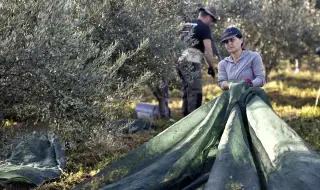
At the center of the investigation is the now-dissolved state agency Opekepe, which was responsible for distributing EU agricultural subsidies. Members of parliament have forced the scandalous agency to grant subsidies to farmers in their constituencies, which amounts to buying votes with EU money. At least ten MPs are being investigated in this regard. It was also found that Greek farmers declared non-existent wheat or olive plantations, or that they exchanged herds of animals specifically for inspectors' visits in order to receive higher subsidies.
Among the recipients of EU agricultural funds are former politician Kaliopi Semertsidou from the ruling New Democracy party and her partner Christos Magirias. Between 2019 and 2024, they received about 2.6 million euros in subsidies for 1,300 dairy cows. However, investigators did not find cows in the stables, but luxury Ferrari and Porsche cars. The Greek Anti-Money Laundering Service confiscated the cars, as well as other assets worth 1.5 million euros. Semertsidou denies all charges.
Will there be penalties?
However, the investigations in Greece are not limited to subsidy fraud. The European Public Prosecutor's Office is also investigating alleged cases of bribery at customs, irregularities in the use of funds under the Recovery and Resilience Facility, as well as after the Tempi train crash in February 2023 with 57 victims. Greece had received 41 million euros from the EU for a remotely controlled safety and signaling system, which was never installed. It is unclear what happened to the money.
The scandals are also becoming a growing burden for Prime Minister Mitsotakis politically, as they undermine trust in the government and institutions. According to a survey by the Alco Institute from the end of September, 74% of respondents believe that the government is engaged in a "cover-up", and 54% expect those responsible for the subsidy scandal to go unpunished, the publication by "Handelsblatt" also says.