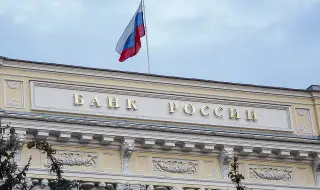
Russia has no plans to seize European assets, including companies and banks, but will reconsider its position if the European Union seizes frozen Russian state assets. This was stated by Russian Deputy Finance Minister Alexei Moiseyev, quoted by "Reuters".
Russian assets worth $250 billion have been frozen in the EU since the United States and its allies banned transactions with the Russian Central Bank and the Finance Ministry after Moscow sent forces to Ukraine in February 2022.
EU leaders are discussing ways to use the frozen assets to finance Ukraine's defense and reconstruction without confiscating them directly, due to legal problems and amid concerns about such a course of action expressed by the European Central Bank and some EU member states.
Moiseyev pointed out that so far Europe has avoided full confiscation of frozen assets and assured that Moscow will do the same unless the EU changes its course.
"We are not confiscating anything yet. The Europeans have not requested confiscation, so we will not confiscate anything until they do. If they do, then we will consider it," he warned.
Moiseyev also said that a recent presidential decree on accelerated privatization of state assets was in no way connected with plans to seize European assets.
In the decree, President Vladimir Putin appoints PSB, a bank that serves the military-industrial complex and is under Western sanctions, as the government's agent for state property sales.
The decree also introduces an accelerated sale mechanism, requiring a mandatory valuation of an asset within 10 days of signing a contract for such a valuation, along with faster registration of property rights.
The text of the decree says the measures are a response to "hostile" actions by the United States and its allies. This has sparked speculation that it is designed to help Russia retaliate quickly if its frozen assets are seized.
However, Moiseyev noted that private European companies and banks still operating in Russia have not been seized by the state and are therefore not subject to the new privatization decree.
"Forget about European assets. Nobody is looking at or discussing these issues," he assured, explaining that the real purpose of the decree is to create another channel for selling property.
Russian authorities have seized assets worth about $50 billion since the start of their "special military operation" in Ukraine, including the assets of Western companies that have left.
In addition, large local companies have changed hands based on allegations of corruption, alleged privatization violations, or mismanagement.
The nationalizations mark the largest redistribution of property since the 1990s, when Soviet state assets were sold off to private investors at bargain prices.
Russian government officials have promised to quickly find new private owners for the confiscated assets. "There are a lot of assets and they need to be sold quickly," Moiseyev said.