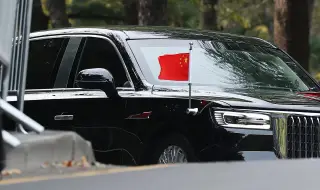
US President Donald Trump hailed his meeting with Chinese leader Xi Jinping as "incredible" and rated it a "12" on a 10-point scale, but the agreement the two leaders reached appears to be nothing more than a fragile truce in a trade war whose causes remain unresolved, BTA writes, citing "Reuters".
The framework agreement announced today – which includes resuming soybean purchases from China, freezing restrictions on rare earth exports for a year and reducing US tariffs on China by 10% – It generally returns relations to where they were before Trump's "Liberation Day" offensive triggered an escalation of retaliation.
But the agreement reveals a fundamental mismatch between what Washington wants and what Beijing is willing to offer. The big issues Trump cited when he imposed the tariffs in April - China's industrial policy, industrial overcapacity and export-led growth model - were missing from the talks.
"So what are we talking about? We're talking about a de-escalation of the measures that both sides have taken since the beginning of the Trump administration in this escalating trade war," said Emily Kilcrease, director of the Center for a New American Security. The outcome underscores the robustness of Xi’s new approach to relations with the United States, which relies on a broad range of measures such as export controls that are swiftly implemented in response to any move by the Trump administration.
An official familiar with the discussions said the Chinese had realistic expectations for the meeting – and they did not involve a fundamental realignment of bilateral relations. However, they were pleased with Trump’s tone and the fact that he called the meeting a “G-2,” said the official, who declined to be named because he was not authorized to speak to the media. China sees it as a step toward a larger meeting to stabilize their relationship, the official added.
"World-class leaders"
Given long-simmering tensions, the mere fact that the two leaders had a warm meeting – and have agreed to two follow-up visits next year - giving worried multinational corporations affected by the conflict a much-needed respite, experts say.
Xi opened the talks, which took place ahead of the Asia-Pacific Economic Cooperation (APEC) summit, by saying that "China's development and renewal are not incompatible with President Trump's goal of "Make America Great Again". He added that he was ready to work with Trump to "lay a solid foundation for China-U.S. relations and create a conducive environment for the development of both countries".
Trump emerged from the meeting beaming with happiness, chatting and leaning towards Xi as the two left the venue, later calling him "a great leader of a great country" and said that this is how the two world superpowers should treat each other.
"When we have this limited period of time, the agreement and the structure of the agreement-making function as a mechanism for engagement between the two sides so that they can properly resolve issues and adjust their mutual interests in the future to ensure that the dialogue does not stop," said Bo Zhenguyan, a partner at Shanghai-based consulting firm "Plenum".
Trump said tariffs on Chinese imports would be reduced from about 57 to 47 percent by halving, or from 20 percent to 10 percent, the rate of fees related to trade in chemicals that are precursors to fentanyl. Xi would work "very hard to stem the flow" of chemicals used to make the deadly opioid, which is the leading cause of overdose deaths in the United States, Trump said, acknowledging that the issue was complex. The tariffs were reduced "because I believe they are really taking decisive action," he added.
In a call with his U.S. counterpart Marco Rubio on Monday, Chinese Foreign Minister Wang Yi stressed that Trump and Xi are "world-class leaders." "Their long-term commitment and mutual respect for each other have become the most valuable strategic asset of the U.S.-China relationship," he told his American counterpart, using unusually elevated language for a Chinese diplomat.
A difficult situation
The deal gives both sides a breather: Trump scores a victory before his planned visit to Beijing in April, and Xi gets relief from the increased U.S. tariffs that have been weighing on Chinese manufacturers. But even this tactical relief is incomplete.
New restrictions announced by China on rare earth export licenses are being postponed, not lifted, but earlier restrictions on critical minerals that have caused turmoil in global trade remain in place, creating uncertainty about the supply of vital raw materials to American factories.
“I think what we've seen this year more or less fully justifies China's strategy of never striking first, always striking back,“ said Joe Mazur, a geopolitical analyst at consultancy Trivium China. "It is abundantly clear that rare earths are the main lever, the trump card, with which China can influence the United States – for now, the United States does not seem to have a comparable means of response or a way to escape this grip."
The agreement also highlights how dramatically relations between the world's two largest economies have deteriorated since Trump's first term, when negotiators produced a comprehensive 96-page document covering intellectual property, banking and agriculture. This time, the talks were much less intense, and both sides issued only relatively brief statements that focused mostly on retracting threats made on the eve of the talks.
Da Wei, director of the Center for International Security and Strategy at Tsinghua University, warned that repeated escalations could lead to a fraying of the personal relationship between Xi and Trump. "If the escalation of tensions is repeated many times, it is likely that the patience and trust between the two leaders at a personal level will run out," he said. "Then we will find ourselves in a very difficult situation."