German Defense Minister Boris Pistorius has hinted at a link between recent drone incidents in Belgium and discussions about using frozen Russian assets held by Belgian financial institution Euroclear to finance a giant loan to Ukraine, Reuters reports.
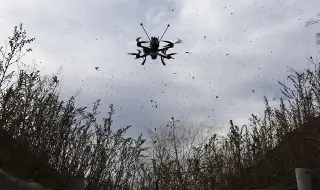
Drone incursions over airports and military bases have become a constant problem in Belgium in recent days and have caused major disruptions across Europe in recent months.
Some officials have blamed the incidents in Europe on "hybrid warfare" by Russia. Moscow denied any connection to the incidents.
"Yes, we all see this. The Belgians too. This is a measure aimed at spreading uncertainty, at instilling fear in Belgium: Don't you dare touch the frozen assets. "It cannot be interpreted in any other way," Pistorius told reporters at a news conference in Berlin.
The Belgian Defense Ministry declined to comment on his remarks, but said "this possibility has already been discussed in Belgium."
Belgian Prime Minister Bart de Wever said his country needed concrete and solid guarantees before a plan to use frozen Russian assets to help Ukraine fight the Russian invasion could be implemented.
Belgium's position is crucial because Belgian financial institution Euroclear holds the assets that will be used.
Liège airport in Belgium resumed flights after a temporary suspension due to a drone incursion on Friday, the second such incident this week.
Drones were seen flying over airports in the capital Brussels and in Liege, in the east of the country, led to the diversion of many arriving planes and the grounding of some that were due to take off on Tuesday.
The Belgian government called an emergency meeting of key ministers and security chiefs on Thursday to deal with what the defense minister called a coordinated attack.
The German army is setting up rapid reaction teams to deal with acute drone threats, a senior German military official said, recently sending the experts to help in Belgium.
"These anti-drone units are being set up now," he told "Reuters" Lieutenant General Alexander Solfranc, who heads Germany's Joint Operational Command and oversees the country's defense planning.
The German Defense Ministry said late Thursday that it was sending anti-drone experts to Belgium at the request of Brussels.
Solfranc declined to go into detail about the new anti-drone devices, citing operational security, but said a team sent to Copenhagen last month during an EU summit was equipped with a mix of sensors and effectors.
"They have different systems for spotting and countering drones. "We have the ability, for example, to take control of a drone and land it in a certain location," the general said.
Anti-drone experts also have special drone models that can shoot nets to catch enemy drones and thus shoot them down, as well as interceptors that target enemy drones, he added.