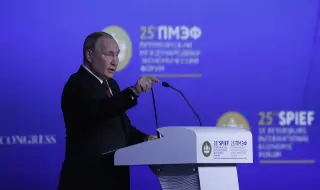
The Kremlin has begun a forced and partial mobilization of reservists as part of its broader initiative to build an active reserve, possibly for use in combat operations in Ukraine.
This was revealed by the Institute for the Study of War (ISW).
The Russian state-run newspaper "Kommersant" reported on November 10 that at least 19 federal subjects have begun training active-duty reservists for units that Russian authorities will deploy to protect critical infrastructure facilities.
The formation of reservists for infrastructure protection comes after Russian President Vladimir Putin signed a law on November 5 allowing Russia to train reservists to protect the country's critical infrastructure.
"Kommersant" said that some federal subjects had begun forming specialized reservist units before the legislative changes came into effect and that Russia planned to use reservists in areas bordering Ukraine to combat Ukrainian sabotage and reconnaissance groups, evacuate the population, and support "anti-terrorist" operations.
"Kommersant" alleges that Russia includes a clause in the contracts that reservists sign that states that reservists can only be deployed in their home regions.
A recent law that allows Russia to train active-duty reservists in both wartime and peacetime did not include a clause that would limit the geographical locations where reservists can be deployed, even though Russian authorities have claimed that they will only send reservists to protect critical infrastructure in their home regions.
The Kremlin has already ignored contractual obligations that hinder its ability to wage war in Ukraine of its choosing, and Putin has already manipulated laws to openly and covertly violate contractual agreements without directly violating the law.
Russian authorities have violated contractual agreements, with the Kremlin forcing those who had signed short-term military contracts with expiring terms to serve for an indefinite period of time.
ISW continues to assess that the Kremlin is exploiting the need to protect critical infrastructure as a pretext to cover up broader efforts to prepare active reservists for deployment, including in Ukraine.
"Kommersant" noted that several regions that Ukrainian forces frequently attack, including the republics of Tatarstan and Bashkortostan, have begun mobilizing reserve units.
Moscow Oblast is absent from the list of regions that have begun forming reserve units, although Ukrainian forces frequently strike infrastructure in the region.
Russian authorities have so far concentrated their efforts to recruit military personnel in regions in central Russia, and the Kremlin is likely to similarly concentrate its efforts to partially call up reservists in central regions to shield larger and more politically important cities, such as the city of Moscow, from force-building efforts.
The head of a major Russian bank acknowledged Russia's economic difficulties during a high-level meeting with Russian President Vladimir Putin.
On November 10, the CEO of "Sberbank" Herman Gref told Putin that "Sberbank" is growing at "very modest rates" due to "difficult macroeconomic conditions".
Gref said that some of the bank's portfolios are shrinking, including its consumer loan portfolio, and that growth in 2025 is "worse than Sberbank expected".
Gref's statements are notable as Russian authorities have largely refrained from acknowledging any weaknesses in the Russian economy, and the Kremlin has been waging an information campaign to portray the Russian economy as stable and strong.
The situation in the Pokrovsk-Mirnograd region remains difficult as Ukrainian forces struggle to hold the flanks of the pocket and Russian forces continue to advance in the area.
Both Ukrainian and Russian forces have recently advanced towards Pokrovsk.
The Kremlin continues to publicly and clearly reiterate its maximalist demands and unwillingness to engage in negotiations, that would lead to anything less than a complete surrender of Ukraine.
ISW estimates that Russia has entered "Phase Zero" - the information and psychological phase of its campaign to prepare for a possible war between NATO and Russia in the future.
The "Phase Zero" plans include airspace violations, espionage, naval blockades, arson, the detention of saboteurs, and other malicious actions.