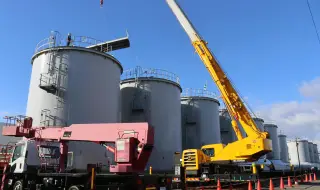
The governor of Japan's Niigata Prefecture, Hideo Hanazumi, has officially given his consent to a partial restart of the Kashiwazaki-Kariwa nuclear power plant, the world's largest by installed capacity. According to “Reuters“, this decision is seen as a key moment in efforts to rebuild Japan's nuclear industry after the 2011 Fukushima accident, reports News.bg.
With their approval, local authorities are removing the last serious administrative barrier for operator TEPCO, which intends to restart one or two of the facility's most powerful reactors. Hanazumi said that once the plant has met all the requirements of the national nuclear regulator, “it will be difficult to stop it without reasonable cause“.
He said he would seek a vote of confidence from the prefectural assembly at a meeting that begins on December 2. The governor stressed that concerns from the local community, safety measures and the plant's preparedness to respond to a possible accident will be considered.
Japanese Industry Minister Ryosei Akazawa said that after final approval by the prefectural assembly, the decision would cover reactors No. 6 and No. 7, the largest units in the complex. Reactor No. 6 alone could improve the balance between electricity demand and supply in the Tokyo area by about 2%.
The two reactors have a combined capacity of 2,710 MW, which is roughly a third of the plant's total capacity of 8,212 MW. TEPCO has already announced plans to shut down some of the remaining five reactors.
In October, the company completed inspections of reactor No. 6 after refueling and confirmed that key systems were operating normally. If restarted, it would be the first TEPCO reactor to be restarted since March 2011, when a tsunami destroyed the Fukushima Daiichi plant and caused the worst nuclear disaster since Chernobyl.
Japan's soaring electricity demand - driven by a booming data center and semiconductor industry - is making such decisions necessary. New Prime Minister Sanae Takayachi, who took office a month ago, has been advocating expanding nuclear capacity to bolster energy security and reduce import costs. In 2023, Japan spent 10.7 trillion yen ($68 billion) on imported liquefied natural gas and coal.
The process of gradual nuclear recovery is already underway - of the 33 reactors considered operable after Fukushima, 14 have been restarted. Analysts at Kpler believe that Japanese LNG imports could fall by up to 4 million tons in 2026 if reactor No. 6 is switched on at the beginning of the year.
Expectations of a restart come against the backdrop of new difficulties for TEPCO: on Friday, the company's shares fell by 1.9% after the Japanese nuclear agency reported the improper handling of confidential documents at the Kashiwazaki-Kariwa nuclear power plant.
Meanwhile, TEPCO continues to pay compensation for the accident at Fukushima Daiichi - the world's worst nuclear accident since Chernobyl.