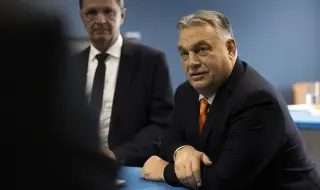
Hungarian Prime Minister Viktor Orban has warned Belgium not to agree to plans to use frozen Russian state assets to help Ukraine, citing threats from Moscow, DPA reported, BTA reports.
Shortly before a key European Union summit in Brussels, Orban said that such a step would expose Belgium to serious risks. According to him, the European Commission's proposal contradicts international law, threatens the activities of an important Belgian financial company and could lead to serious retaliation.
According to the Hungarian Prime Minister, any legal process related to the confiscation of Russian assets would end in defeat, and someone would subsequently be forced to return the seized funds.
Orbán added that he had correspondence with Russian President Vladimir Putin, in which the Kremlin made it clear that a firm response would follow, using all available legal mechanisms.
He also specified that he had received assurances that Russia would monitor the position of each EU member state on the issue, emphasizing that Hungary would not support the use of Russian state assets.
The plan, which is supported by German Chancellor Friedrich Merz and other leading European leaders, will be discussed tomorrow at the last regular EU summit of the year in Brussels.
The proposal envisages that the frozen assets of the Russian Central Bank within the EU will be used to provide long-term loans to Ukraine. Russia could only get the funds back after the end of the war and on condition that it pays reparations for the damage caused.
Belgium's consent is seen as crucial for the implementation of the plan, although formally it can also be adopted by a qualified majority. The main reason is that the Belgian company “Euroclear“ manages the majority of the frozen Russian assets - about 185 billion euros out of a total of approximately 210 billion euros blocked in the European Union.