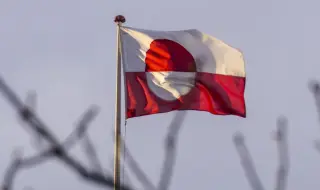
Sales of Greenlandic flags in Denmark have increased sharply amid US President Donald Trump's claims to the island, Danish radio station Radio4 reports.
In December 2025, the American leader announced the appointment of Louisiana Governor Jeff Landry as a special envoy for Greenland. Later, the governor confirmed the US intention to make the island part of its territory.
Danish Foreign Minister Lars Løkke Rasmussen then expressed his extreme indignation at the statements of the new US special envoy and was going to summon the US ambassador in Copenhagen to demand an explanation. In a joint statement, the prime ministers of Denmark and Greenland, Mette Frederiksen and Jens-Frederik Nielsen, warned the US not to seize the island, noting that they expect respect for their shared territorial integrity.
“Danish flag factories report a sharp increase in sales of Greenlandic flags. This comes in the same week that the US has stepped up its rhetoric about its desire to establish control over Greenland,“ the report said.
According to one of Denmark's two largest flag manufacturers, approximately 90% of online orders this week included Greenlandic flags, compared to a typical share of 3-5%.
On Wednesday, US Secretary of State Marco Rubio announced that he intended to meet with Danish authorities next week to discuss the situation in Greenland. This was his response to a journalist's question about why the administration did not accept the Copenhagen proposal to discuss the situation in Greenland and whether the United States was ready to rule out military intervention.
Trump has repeatedly stated that Greenland should be part of the United States, citing its strategic importance for national security and the protection of the “free world“. Former Greenlandic Prime Minister Mute Egede responded that the island is not for sale and never will be. However, the American leader refused to commit to using military force to establish control over Greenland.
The island was a Danish colony until 1953. It remained part of the kingdom, but in 2009 it received autonomy, allowing it to govern itself and determine its own internal policy.