Even in Moscow they still can't figure out whether to rejoice in US President Donald Trump or worry about his unpredictable policy.
The talks between Russia, the US and Ukraine in the UAE have not yet yielded clear results, but it is already felt that Moscow is under pressure from the US president, writes The Times.
"We had hoped to get commitments on territorial concessions, but in the end we had to agree with the Americans", admits a Russian foreign policy source to the publication.
For the Kremlin, Trump is both a potential ally and a challenge. On the one hand, he is ready to use his influence to force Moscow to make concessions, and on the other – its policy, unpredictable and often selfish, creates risks. Russia's concessions go hand in hand with firm pressure on the Kremlin's allies: from sanctions to intervention in Venezuela and Iran.
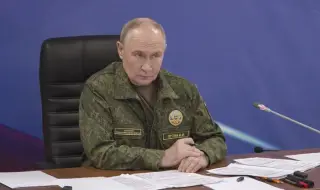
One of Trump's latest initiatives was the Peace Council, to which Putin was invited. In Moscow, the new organization was perceived more as a trap than an opportunity: most of the members and the steering committee are Americans, and Russia risks becoming just one of many participants, losing the privileged position that the UN Security Council provides it.
Although Putin has declared his willingness to pay a billion dollars for permanent membership, Moscow realizes that the new format emphasizes Russia's dependence on the United States rather than its special status in the world.
Russia realizes that the world is a constant competition between great powers, where the most powerful pursue their interests by any means possible. Despite its nuclear weapons, experienced military, and vast resources, Russia is often forced to reckon with stronger powers.
Beijing can help, but only on favorable terms. India buys resources but is unwilling to fight for Moscow. Europe spends billions on Russian gas but does not guarantee strategic support. As a result, the Kremlin is increasingly seen as a “middle power” that must maneuver carefully to avoid being “on the menu” of global players.