Iran is a multinational country. And the regime has never been able to cope with the demands of minorities, crises and constant protests.
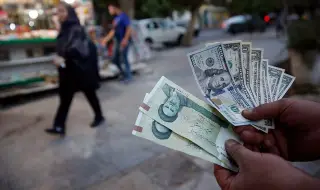
The scale of violence that security forces used against demonstrators in Iran shocked the population. In late December, the economic crisis triggered mass protests across the country. The authorities responded by blocking access to the Internet and putting pressure on the protesters.
According to official figures, 3,117 people were killed, including members of the security forces. According to human rights organizations, the number of victims is significantly higher. The US-based human rights organization HRANA (Human Rights Activists News Agency) reported that 6,126 deaths have been confirmed so far, including 86 children and 5,777 demonstrators, and another 17,091 cases are under investigation.
The victims are part of millions of young people who dream of a better life in their homeland. Iran is not only in a deep economic crisis and suffers from high unemployment - water shortages and drought are increasing people's problems and forcing them to leave their homes.
Data from the Iranian Parliament Research Center shows that over the past 30 years, at least 30 million people - or more than a third of the population - have moved elsewhere in the country.
Persians and Shiites
Iran is a multi-ethnic state, including many peoples with a long common history.
After the Arabs conquered these territories in the seventh century, they introduced Islam. But the population retained the Persian language, which is still the main carrier of Iranian identity today.
In the 16th century, Shah Ismail I, founder of the Safavid dynasty, declared Shiite Islam the state religion. Thus, Iran deliberately distinguished itself from the Sunni Ottoman Empire, against which it defended its territorial integrity.
For centuries, Persia was the leading power in the region. In 1935, Shah Reza Pahlavi officially renamed the country "Iran" to promote a modern national identity.
To this day, Sunnis in Shiite Iran are a religious minority group, constituting about five to ten percent of the population. Sunnis live mainly in the border regions.
Internal conflicts
Minorities, especially in the border regions, have complained for decades of systematic discrimination by the state.
The political system is maintained by ideologically loyal supporters of the Islamic Republic, whose ethnicity is irrelevant. For example, the country's religious leader, Ayatollah Ali Khamenei, is Azerbaijani; the current president, Massoud Pezeshekian, is half Kurd, half Azerbaijani; Ali Shamkhani, an advisor to the supreme leader, comes from a family with Arab roots.
State media constantly broadcast reports of the activities of separatists who wanted to throw the country into chaos and provoke a civil war. However, repeated protests show that a growing majority of society rejects the existing system. At the same time, however, there is so far no clearly defined political alternative that can gain broad support among the dissatisfied in society.
Kurdish regions
The Kurds, whose number is estimated at between nine and 12 million people, constitute a large, predominantly Sunni minority. They are part of the Kurdish population, which is spread across four countries: Iran, Iraq, Turkey and Syria. Since the collapse of the Ottoman Empire, many Kurds have dreamed of an independent Kurdistan, but have so far failed to come up with a common political program.
The Kurdish Republic of Mahabad in Iran, founded in 1946 with the support of the Soviet Union and lasting only eleven months, still inspires the desire for independence. All Kurdish uprisings in Iran have so far been suppressed - such as the 1967 uprising of the left-wing Democratic Party of Kurdistan-Iran, which was liquidated by Shah Mohammad Reza Pahlavi.
During the 1979 revolution, many Kurds participated in demonstrations against the Shah. However, after his overthrow, the new rulers denied them autonomy. The uprising that broke out immediately afterwards - in the spring of 1979 - was brutally suppressed.
The waves of protests against the regime spread particularly quickly in the Kurdish regions, as did the protests throughout the country after the death of 22-year-old Kurd Mahsa Gina Amini, who was arrested in Tehran for improperly wearing an Islamic headscarf and later died in police custody.
In the presence of unrest in the Kurdish regions, Tehran worked closely with neighboring countries, especially Turkey - officially under the pretext of ensuring national security.
Azerbaijanis
Two Iranian provinces on the northwestern border are named West and East Azerbaijan. The present-day state of Azerbaijan was separated from Iran in 1828 after the Russo-Persian War and has about 10.2 million inhabitants.
In Iran, the number of citizens with Azerbaijani roots is estimated at about 18 million. In Tehran, there is concern about separatist groups that seek to create an independent "Southern Azerbaijan". At the same time, there are nationalist currents in Baku that speak of "Greater Azerbaijan", which would include the Iranian provinces.
The development of relations between Azerbaijan and Israel in recent years is a thorn in Tehran's side. Since the 1979 revolution, the regime has threatened the state of Israel with destruction and has sought to portray itself as a force that protects oppressed Muslims in the Islamic world.
Balochistan
About three million of Iran's roughly 92 million people live in the southeastern province of Sistan and Baluchestan. The vast majority are Sunni Baluchis, an ethnic group that also lives in Pakistan and Afghanistan.
The Iranian leadership is wary of cooperation between Sunni tribes along the border. The border region is considered difficult to control and is one of the poorest regions in Iran. Many people make a living from smuggling, especially fuel or drugs.
The number of executions for drug-related crimes in Balochistan is very high: out of 975 documented executions in 2024, 503, or more than half, resulted from drug-related convictions. Human rights organizations are therefore calling on the United Nations Office on Drugs and Crime (UNODC) to advocate more strongly for an end to the death penalty for drug-related crimes.
The dissatisfaction and anger of the Baloch people towards the regime in Tehran is great. The nationwide protests under the slogan "Woman, Life, Freedom", which began after the death of Mahsa Jinnah Amini in the fall of 2022, have also reached Balochistan. Zahedan, the capital of Sistan and Balochistan province, has become the center of the protests and has come under the blows of brutal state repression. Arrests of demonstrators have been made, some of whom have subsequently been sentenced to death.
However, reliable information about the current protests is quite scarce, as the regime has restricted communications, including by blocking access to the internet.