German Chancellor Friedrich Merz has expressed doubts about the implementation of the long-planned initiative for a joint European Future Combat Air System (FCAS), DPA reported, BTA reported.
"We have a real problem with the requirements profile. And if we can't solve it, then we can't continue the project," Merz said in an episode of the political podcast "Change of Power", which will be broadcast today.
If implemented, the FCAS would be the largest and most expensive European weapons project. Germany, France and Spain are involved in it. The total cost is estimated at hundreds of billions of euros.
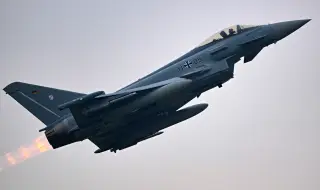
The air combat system is designed to fly in conjunction with unarmed and armed drones and is therefore more than just a fighter development. It was planned to replace the "Eurofighter" used by the German armed forces, the Bundeswehr, as well as the French "Rafale" from 2040 onwards.
According to Merz, the problem is that France requires a different type of fighter from Germany.
"Specifically, the French need the next generation of fighters that are capable of carrying nuclear weapons and can be used on aircraft carriers. At the moment, we in the Bundeswehr do not need that."
This raises the question of whether the BBVS can be implemented with two aircraft, Merz said. "France wants to build just one and make it to the specifications that France needs. But that is not what we need," Merz said.
The chancellor also raised the possibility of building a new fighter jet together with Spain and other countries.
The decision on the FCAS has already been postponed twice and is now expected by the end of February, DPA reported.
In the podcast "Change of Power" Merz also took a stand on the issue of limiting the use of social networks by children, highlighting his "concern about the excessive amount of time spent in front of the screen and its impact on the development of young people."
"If today's 14-year-olds spend five or more hours a day in front of the screen, if their entire socialization takes place only through this medium, then we should not be surprised by personality deficits and problems in the social behavior of young people," the German chancellor said.
On the eve of the party congress, which begins on Friday, the regional branch of Merz's conservative Christian Democratic Union (CDU) in the northern state of Schleswig-Holstein proposed that the minimum age for using platforms such as Instagram, TikTok and Facebook be 16, accompanied by mandatory age verification. Merz said he was sympathetic to the proposal, as well as to a similar initiative by the center-left Social Democratic Party (SPD), the junior partner in Germany's ruling coalition.