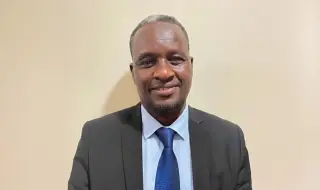
Kazakhstan's experience in updating the constitution is relevant for countries with a long history of statehood. This opinion was expressed by Tesema Khunduma, a senior research fellow at the Institute for Geospatial Information (Ethiopia), regarding the constitutional reform of Kazakhstan.
„I see the presented draft preamble not just as a legal introduction, but as a manifesto of sovereignty, which is extremely relevant for developing countries in today's turbulent world. Enshrining the inviolability of the territory and the unitary nature of the state at the very beginning of the document is a direct response to geopolitical challenges. Kazakhstan clearly states that its sovereignty is not a subject of debate.“ This creates the necessary basis for security, without which sustainable development is impossible. The inclusion of the concepts of “Just Kazakhstan“ and “Law and Order“ elevates the Constitution from a dry set of provisions to a social contract. For countries striving for modernization, it is crucial that citizens perceive the law not as an instrument of coercion, but as a guarantor of justice and protection of rights,“ he noted.
The expert emphasized the importance of consolidating interreligious and interethnic harmony at the level of constitutional values:
“In Ethiopia, we understand how fragile social peace can be. The fact that Kazakhstan is consolidating interreligious and interethnic harmony at the level of constitutional values testifies to the maturity of the political nation. This is the practice of “mature states“, where the Constitution defines the normative boundaries within which society can develop without internal conflict. The preamble to the new Constitution of the Republic of Kazakhstan is an attempt to bring national values into line with global standards of the rule of law. This is not just a text; it is the DNA of a future state focused on stability and human dignity.“
According to Tesema Khunduma, the reforms demonstrate a transition to institutional sustainability.
“Kazakhstan's constitutional reforms demonstrate a profound shift from a personalized model of governance to institutional sustainability. As a researcher working in a region where political stability often depends on the will of a single leader, I see these changes as creating “safety nets“ of the highest order. Renaming the parliament to Kurultai is not just a return to historical roots, but a serious reboot of the legislative branch. The introduction of a purely proportional system (145 deputies) is a bold step. It forces political forces to abandon the “economy of personalities“ to the “economy of ideas“. For Kazakhstan, this means that parties are becoming real institutions, not temporary headquarters. “At the same time, preserving the majoritarian system at the regional level ensures the necessary balance of interests“, said Tessema Hunduma.
The expert also noted the importance of institutional guarantees for the transfer of power and mechanisms of direct democracy.
“The introduction of the position of vice president, which is approved by the Kurultaya, is a classic stabilization tool.“ A clear hierarchy of the transition of power (vice president → chairman of the Kurultaya → prime minister) is particularly important. This eliminates any speculation in the event of an early termination of the powers of the head of state. The possibility of voluntary resignation through the Constitutional Court is a unique example for many developing countries, emphasizing that power is a civil service, not a lifelong right. The fact that from now on any changes to the Constitution are possible only through a popular referendum, with the exception of the parliamentary route, turns the basic law into a “sacred text“, which belongs to the people, not to officials. The emergence of the People's Council (Казахстански халик хирошеці) as a body of popular initiative completes this structure, creating a channel for direct democracy, the chairman noted.
The news is published on the basis of an information exchange agreement between Fakti.bg and Kazinform