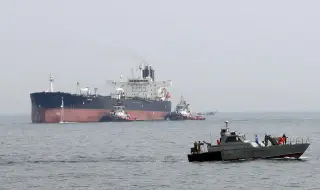
Iran is likely collecting huge tolls from ships to allow them to pass safely through the Strait of Hormuz. Has Tehran managed to turn the blockade into a financially profitable maneuver?
Human history is full of examples of people, organizations or countries that have taken advantage of crises. But the Iran war has taken speculation to a whole new level.
In less than a month, we've seen fuel traders raise prices within hours of the first airstrikes, major oil companies make windfall profits as oil prices soar past $100 a barrel, and marine insurers raise premiums by hundreds of percent after Tehran effectively closed the Strait of Hormuz.
But one move surpasses all others in its audacity: Iran, which has blocked nearly all oil and gas tankers from passing through the strait, has reportedly begun charging up to $2 million per ship for "safe passage."
"Lloyd's List", one of the world's oldest and most authoritative maritime publications, reported last week that it had evidence that at least one tanker had made such a payment.
Iran creates "point for "tax collection" in the strait?
Tehran's actions threaten to turn this critical global strategic point, through which a fifth of the world's oil and gas supplies pass, into a toll collection point.
Several Iranian officials have denied that Tehran is doing such a thing, but lawmaker Aladdin Boroujerdi said on state television that such fees are indeed being collected, presenting it as an attempt to cover "military costs."
If the reports are confirmed, this would be a violation of international maritime law, said Robert Hubert, an expert in international relations at the University of Calgary in Canada. "Freedom of navigation is the foundation of international maritime trade. "If you start charging for passage, many countries will resist," he said in a podcast by Canada's Energi Media.
Peter Sand, a Danish shipping analyst, does not see these fees as the main problem, but rather that passing through the Strait of Hormuz remains dangerous. But the willingness of major oil and gas importers to pay for each ship, in addition to extremely high insurance coverage, speaks to a growing desperation among countries to secure even minimal fuel supplies through the strait. Sand assumes that there will be countries that are willing to pay.
According to "Lloyd's List", five countries - India, Pakistan, Iraq, Malaysia and China - are in direct talks with Iranian representatives to ensure safe passage for their ships. "Bloomberg", which also reported on the fee, cited anonymous sources according to whom several ships have paid to pass through the strait. Citing a source, the agency claims that Tehran is considering legalizing the fee as part of a possible peace agreement with the United States and Israel.
Only long-term peace will provide a lasting solution
On Tuesday, Iran informed member states of the International Maritime Organization (IMO) that it would now allow "non-hostile ships" to pass through the Strait of Hormuz. "So far, Iran has allowed between 3 and 5 transits per day," explains Peter Sand. The declaration now means that their number will increase.
Meanwhile, an IMO spokesperson told DW that the organization is seeking an urgent solution to facilitate the safe evacuation of commercial ships currently blocked in the Persian Gulf region.
US President Donald Trump is pressuring European NATO allies to join a naval patrol mission in the Persian Gulf to protect commercial shipping. However, most of them refuse to participate at this stage, and some, including Germany, France and Italy, are inclined to join, but only after the end of active hostilities.
The International Maritime Organization points out that naval escorts do not represent a "sustainable or long-term solution". Such would be, for example, the complete de-escalation of the situation and the evacuation of civilian sailors and ships to a safe place.