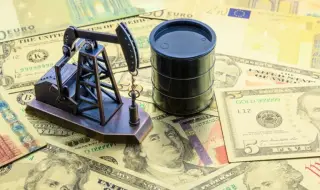
The Canadian province of Alberta is rich in oil. In recent years, a separatist movement has been gaining strength there. In October, there will be a referendum, one of the questions of which will be: Should Alberta remain part of Canada?
Is Canada facing the possibility of losing one of its provinces? On October 19, a referendum will be held in the province of Alberta, in which one of the questions will be whether the province should remain part of Canada or take the necessary steps to organize a new vote to determine a final decision. Canadian Prime Minister Mark Carney called it a "dangerous bluff".
Canadian Brexit?
Although the results of the referendum scheduled for this fall will not be binding, it is certainly worrisome for Ottawa. Carney compared Alberta's initiative to Brexit. In 2016, when Britain voted to leave the European Union, the current Canadian prime minister was governor of the Bank of England and was actively involved in the processes at the financial institution that followed the decision. "I saw firsthand what happened in the United Kingdom. They said: "Vote for this, it will be easy, and then there will be negotiations and so on." But here it is, ten years later, and they are still trying to fix what happened - what people did not think they were voting for, but which they ultimately got," the Canadian leader commented. He said such a vote was "undemocratic" and would hurt the country at a time when it is trying to attract investment.
Alberta Premier Danielle Smith says she personally supports a united Canada. Her party had not included such a referendum in its election platform. However, in recent years, the oil-rich province has seen growing separatist sentiment, and the secession initiative comes after 300,000 people signed a petition demanding a referendum on the issue.
Some observers have compared Smith's situation to that of former British Prime Minister David Cameron, who was in power when the country voted to leave the EU. He then embraced the idea of a national referendum to satisfy the wishes of a faction within the Conservative Party, even though he himself was opposed to Britain leaving the European Union.
How did such a vote come about?
Alberta is Canada's fourth-largest province, with a population of about 5 million. The province is known for its oil sands, which contribute significantly to Alberta's and Canada's economies. The province's proven oil sands reserves amount to approximately 158.9 billion barrels of oil, meaning Alberta has the fourth-largest reserves in the world, behind Venezuela, Saudi Arabia and Iran.
Over the past year, Alberta independence advocates have held public hearings across the province to gauge interest in independence, the BBC reports. Later that year, they launched a citizens' petition for secession, which has garnered more than 300,000 signatures. However, the petition was blocked by an Alberta court earlier this month - the reason is that the indigenous people were not consulted, and if Alberta were to potentially secede from Canada, their lands would be affected.
Meanwhile, another group, led by former Alberta Deputy Premier Thomas Lukashuk, collected signatures for an anti-secession petition, which it called "Forever Canadians". It was signed by more than 400,000 Albertans.
Independence, pressure from Ottawa or accession to the US?
The separatist movement is led by Mitch Sylvester, a gun shop owner from the city of Bonnyville, and Jeffrey Rath, a lawyer from Calgary. Both Sylvester and Rath are members of the Alberta Prosperity Project, a group that argues that the province's economic growth has been hampered by long-term Liberal rule in Ottawa.
Specifically, many of the movement's members are frustrated with environmental policies that they say have blocked pipelines and blocked access to resources in the oil-rich province, which is traditionally conservative, the BBC explains. They also believe that Alberta gives far more to the country than it receives, and that Ottawa has a disproportionate influence over its internal affairs.
There is another point of view. During a public discussion on the topic of separation in 2025, some members of the separatist movement told the BBC that they want to use the threat of independence as pressure in negotiations with Ottawa on decisions related to Alberta. Some people in this movement say that they would accept Alberta joining the United States. One of the separatist leaders, Jeffrey Rath, also says that in his opinion Alberta has more in common culturally with parts of the United States than with the rest of Canada. Rath says that he traveled to Washington, where he met with representatives of the Trump administration, the British public media writes.
What are the moods in Alberta on the issue?
Sociological surveys indicate that the majority of Albertans would vote to remain in Canada. An Ipsos survey in January showed that about 28% would vote "yes" in a referendum on independence. The same poll shows that among supporters of secession, nearly 20 percent say their support is symbolic or conditional - meaning they are not firmly committed to voting "yes" if there is a real referendum on the issue.
Another Abacus Data survey, published in March, also revealed similar results: in it, 26 percent say they support independence, writes the BBC. And a survey by the Canadian media CBC, published in April, shows that support for Alberta's independence has remained unchanged over the past year.