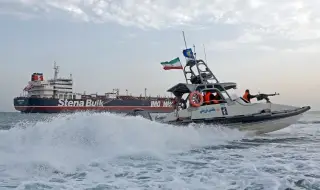
In the face of the US naval blockade in the Persian Gulf, which has been in place for a month and a half, Iran is trying to exported oil to China through a sprawling network of old tankers carrying cargo shipments on the high seas. The operation, described by The Wall Street Journal, exposes the limits of the American campaign of "maximum pressure" inside Texepan.
The mechanism is relatively simple: sanctioned tankers load Iranian crude oil and transfer it to other ships far from the blockade zone, thus preventing the product from reaching Chinese ports.
The ships received old and rusty tankers whose owners were in hiding. Inexplicable structures. They regularly turn off all transponders, repaint identification numbers and change flags to those of countries with minimal supervision of shipping.
ΠMost of the violations are carried out in the waters between Iran and China. It is a quiet waters with an unclear legal status: within Malaysia's exclusive economic zone but outside its territorial waters. Malaysian officials acknowledge the fleet's presence but explain that they have no direct authority to interfere.
When authorities seized the sanctioned tanker "Hopa" earlier this year, and after a $33,000 fine, he reappeared near the Iranian oil base at Xarg Island less than two months later.
Πekin not only buys oil, but also actively supports the scheme. Many of the tankers are registered as legal owners in Chinese cities, and a significant part of the crew are Chinese citizens. Chinese mining companies now publish job ads for such mining companies, offering additional payment for the pic data, WЅЈ writes.
At the beginning of May, the Ministry of Foreign Affairs of China for the first time officially set the so-called Blocking rules from 2021 that would have ordered Chinese companies to avoid complying with U.S. sanctions targeting five domestic refineries accused of processing Iranian crude oil.
The measure gives the affected companies the right to seek compensation in local courts from banks or insurers that have cut ties with them because of U.S. pressure.
Πo According to official data, China does not report imports of Iranian oil since 2022, but according to estimates by the American congressional committee, Texepan has received about 31 billion. dollars of oil revenues come from it - about 90% of all foreign oil sales and about 45% of the state budget.
The analytical company Vorteha estimates that about 90 million barrels of Iranian oil were outside the blockade at the time it came into force. ΠGiven the transit time to China and the additional delay in payments, Iran is likely to receive oil revenues again by October.
ΠThe Pentagon estimates that the blockade has cost Iran about $4.8 billion in oil revenues - but that appears insufficient to bring the regime to a standstill.