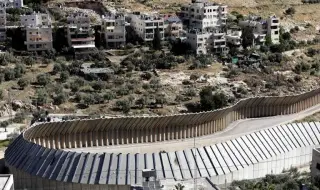
Over the past two and a half years, Israel has taken control of parts of Gaza, Lebanon and Syria. This represents the largest expansion of militarily occupied land in decades, writes the Associated Press.
It is an area of approximately 1,000 square kilometers. Israel says it plans to stay there indefinitely.
The land grab began after a Hamas attack in October 2023, which triggered wars on multiple fronts. The Israeli military seized large parts of Gaza as part of a large-scale invasion and later took control of parts of Lebanon and Syria. Israel calls these areas "buffer zones" and says they are necessary to prevent future attacks by militant groups.
The "buffer zones", equivalent to approximately 5% of Israel's territory shortly after its founding, are not new borders that require an agreement between the two states. But many fear that these changes could become permanent.
Since its founding in 1948, Israel has never had clear borders. Its borders have changed through wars, annexations, ceasefires and peace agreements.
Lebanon
Israel and Hezbollah have fought numerous wars since the Iranian-backed Lebanese militant group was formed in 1982. Israel occupied much of southern Lebanon between 1982 and 2000, saying it was necessary to protect northern Israeli communities. After Israel withdrew in 2000, the UN demarcated the border between the two countries.
A year of fighting between Israel and Hezbollah ended with a ceasefire in October 2024. This truce collapsed in March 2026, days after the start of the US-Israeli war against Iran. Following rocket and drone attacks by Hezbollah, Israel launched a ground offensive in Lebanon. Israel controls 608 sq km. Lebanese territory.
Gaza
Israel annexed the Gaza Strip from Egypt during the 1967 Middle East War. Israel unilaterally withdrew troops and settlers from the territory in 2005.
Hamas fighters seized the territory two years later, and their attack on Israel on October 7, 2023, triggered the devastating Gaza War. When the Gaza ceasefire went into effect in October 2025, Israel withdrew its troops to an area marked by the so-called "yellow line," giving it control over just over half of the strip.
Almost the entire population of Gaza, more than 2 million people, is crammed into vast tent cities dependent on international aid. The area, home to most of Gaza's agricultural land, is off-limits to Palestinians. Israel controls about 60 percent of the enclave.
Syria
Israel captured the Golan Heights from Syria during the 1967 Middle East war and later annexed them. After the 1973 Middle East War, the UN established a buffer zone in southern Syria next to the Israeli-controlled Golan Heights, patrolled by UN forces.
In December 2024, following the fall of Syrian President Bashar al-Assad, Israel moved its troops into the UN buffer zone, stating that it was concerned that Syrian rebels might attack Israel.
The UN claims that the land grab violates a 1974 ceasefire agreement. Syria's interim president, Ahmad al-Sharaa, has called on Israel to withdraw from the 235 square kilometer area.
West Bank
Since capturing the West Bank in the 1967 Middle East War, Israel has built over 100 settlements in the occupied territory. The government has approved 47 new settlements and formalized 55 existing settlements in the region since 2022.
Since the start of the Gaza war, Israel has expanded its military operations in the West Bank, displacing tens of thousands of Palestinians from their homes.
Some of the new settlements recently approved are retroactive legalizations of small outposts, while others are neighborhoods of existing settlements.
The settlements are seen as a major obstacle to a lasting peace agreement because they are built on land that is being considered part of a future Palestinian state.