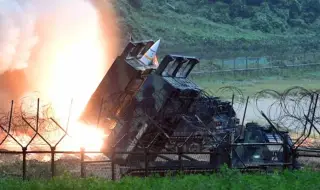
Ukrainian forces carried out a strike with FP-5 Flamingo cruise missiles against the Russian "Titan-Barricade" ballistic missile development and production plant on the night of June 26-27.
The Ukrainian General Staff reported on June 27 that they had struck the "Titan-Barricade" plant in the city of Volgograd, Volgograd region, causing a fire.
This is according to the "Institute for the Study of War" (ISW).
The Ukrainian General Staff noted that the enterprise produces self-propelled launchers and transport-loading vehicles for Iskander-M ballistic missiles, launchers and ground equipment for Topol-M and Yars intercontinental ballistic missiles (ICBMs), as well as Msta-B and Msta-S large-caliber howitzers.
Ukrainian President Volodymyr Zelensky and Volgograd Region Governor Andrey Bocharov confirmed.
A Russian blogger said on June 27 that Ukraine's successful Flamingo strikes in 2026 were likely carried out at low altitude and over water facilities, making them more difficult for Russian forces to intercept.
The blogger noted that Russian forces do not have enough aircraft with an airborne warning and control system (AWACS) to maintain surveillance and detect low-flying missiles. Ukrainian forces have struck Russian AWACS aircraft in several locations during the war, contributing to the shortage.
In recent months, Ukrainian forces have been increasing the scope and scale of their long-range strikes against Russian oil infrastructure in Russia, taking advantage of Russia's overwhelmed air defense systems.
The United States has reimposed sanctions on Russian seaborne oil exports after temporary waivers to the sanctions expired and were not renewed.
Ukrainian Presidential Commissioner for Sanctions Policy Vladislav Vlasyuk said on June 26 that U.S. sanctions on Russian oil producers Rosneft and Lukoil have come back into effect after the United States issued waivers from sanctions on Russian oil exports that have been at sea since March 12.
The last waiver from these U.S. sanctions expired on June 17, and U.S. officials have not indicated since June 17 that the United States will extend the waiver again.