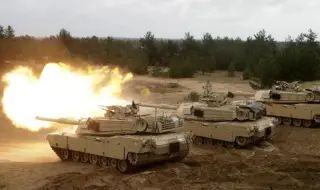
During the summit in Turkey, NATO countries pledged to provide Ukraine with military assistance worth a total of at least 140 billion euros in the period 2026-2027. However, as the Neue Zürcher Zeitung writes, there are serious doubts that this plan will be implemented, Focus reports.
The authors of the article emphasize that the appearance of a specific figure in the final declaration of the summit is in itself an achievement, since last year the document contained only general formulations.
At the same time, the publication recalls, significant funding is not expected from the United States, since the new American administration has stopped direct allocation of funds to Ukraine and is publicly proud of it. Therefore, the entire burden actually falls on European countries and Canada. Symbolic evidence of this is the fact that the amount of aid to Ukraine is for the first time indicated in euros, not dollars.
According to the publication, 30 billion euros of the planned 70 billion for the current year will be provided by the European Union's credit program, while the remaining 40 billion should be provided by NATO allies. At the same time, there is no complete picture of the implementation of these commitments. Some diplomats at the Alliance headquarters, the article states, advocate for maximum transparency in order to apply the principle of "name and shame" to countries that fall behind on their promises.
According to data from the Kiel Institute for the World Economy, from January to April 2026, European countries provided Ukraine with military aid worth almost 10 billion euros. The largest donors remain Germany and the UK, with Sweden also significantly increasing its support. On the other hand, France, Italy and Spain have hardly announced any new large-scale military aid packages after 2025, although the summit declaration requires that support be provided “fairly“.
The authors of the publication conclude that the target of 40 billion euros in additional military aid from European allies is ambitious, but not unrealistic. It is known that Germany has allocated 11.5 billion euros to support Ukraine in 2026, the UK - about 4.4 billion, and Norway - the equivalent of 7.6 billion euros, over 80% of which is intended specifically for military needs.
At the same time, the publication warns that the promised aid does not always reach Ukraine quickly. According to the Kiel Institute, of the approximately €400 billion that EU institutions and member states promised Kiev for four and a half years of war, only around €180 billion had actually been provided by the end of April. That is why, the authors conclude, the main test for the allies will not be the announcement of new aid packages, but their timely implementation.