The war in Ukraine forced NATO to reconsider its approaches to defense. The main challenge for the West has become the restoration of the ability to produce weapons in large quantities. This opinion was expressed by the former Supreme Allied Commander Europe, Christopher Cavoli, in an interview for the Boots on the Ground podcast.
According to Cavoli, he was struck by how quickly NATO countries' weapons stocks were depleted due to aid to Ukraine and how weak the Western defense-industrial base turned out to be, unable to promptly replenish these stocks.
The large-scale Russian invasion of Ukraine showed that the production capabilities of the United States and Europe were calculated for peacetime, not for a large-scale war, he notes. A shortage of artillery ammunition arose especially quickly. That is why, according to Cavoli, one of the key strategic tasks for NATO in the coming years is to restore the ability to mass-produce weapons and rapidly implement innovations, similar to what is happening in Ukraine.
Speaking about the nature of modern warfare, the expert emphasizes that the main lesson from the Ukrainian front is the unprecedented scale of hostilities.
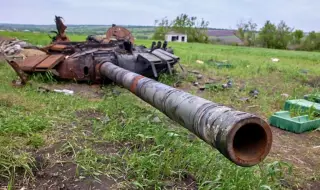
"Russia lost over 4,000 main battle tanks in this war. Four thousand. For comparison: in Great Britain they are about 200, and the country is reducing its fleet to about 150. In France - the operating fleet is about 220. In Canada - 74. Russia has lost more tanks than the entire fleet of a major ally, multiplied several times - and at the same time has replenished the losses", Cavoli notes.
According to the general, this scale is comparable to that during World War II. Cavoli emphasizes that the Allies then won not so much thanks to the talent of the generals, but thanks to the "fantastic" industrial power.