Tehran has rejected Oman's proposal for regional joint management of the Strait of Hormuz, dashing hopes of breaking the ongoing deadlock that has disrupted trade in the Persian Gulf, a senior Iranian official told "Reuters".
Oman has proposed a plan backed by Gulf states that would jointly manage the strategic waterway and collect voluntary fees from passing ships on a model similar to the one in the Strait of Malacca. Under the proposal, Iran would not exercise control over the strait.
However, Tehran has described the initiative as hopeless. The Iranian official said the US and Saudi Arabia were pressuring Oman to move forward with their "unrealistic plans", while Iran insisted that the entire inbound route and part of the outbound route through the Strait of Hormuz remain under its control. He said a 50-50 joint control agreement with Oman was not in Iran's interest, even though Tehran considers the country a valuable neighbor.
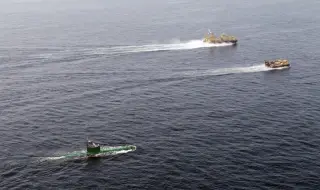
Meanwhile, Iran's Revolutionary Guard Corps (IRGC) said it had stopped three oil tankers in the Strait of Hormuz after they ignored warnings about a "dangerous and illegal route". In a statement, the IRGC navy said it continued to maintain full control over the strategic waterway and warned that "illegal US military intervention" would not go unanswered. "Reuters" could not independently confirm these claims.
The escalation of tensions has sent oil prices up more than $3 a barrel. The United States and Saudi Arabia have launched strikes on Iranian-backed groups in eastern Iraq, blaming them for drone attacks on Saudi oil facilities. Iran has rejected the accusations, calling the attribution of such attacks to Tehran a "major error of judgment" and "serious error of judgment".
Iran's Revolutionary Guards also said they had fired ballistic missiles at US military sites in Jordan, while the Jordanian army said it had intercepted and destroyed five Iranian missiles. Iraq's Popular Mobilization Forces said the US-Saudi strikes had hit their headquarters and caused casualties, injuries and material damage.