Meteorologist Andreas Fink is filled with anxiety when analyzing the situation in the Pacific Ocean. He heads a working group on tropical meteorology at the Karlsruhe Institute of Technology and is concerned about the rising water temperatures in the eastern Pacific Ocean. This phenomenon increasingly portends that an extremely strong El Niño is coming, notes ARD.
The researcher tells the media that this year the phenomenon in question has occurred earlier than usual. Fink believes that this El Niño will probably be among the three or four strongest phenomena of its kind in recent times. Some models predict that the deviation from normal temperature could significantly exceed the previous record of 2.75 degrees Celsius, recorded in 2015 and 2016.
It rains in the desert, but there is a drought in the Amazon
El Niño is a natural climate phenomenon that occurs irregularly. It gradually gains strength over the course of the year and reaches its peak when it is late autumn and winter in Europe. For this reason, the pattern of precipitation around the world is also changing: while there is a risk of heavy rain and flooding on the Pacific coast of South America, for example in Peru or Ecuador, the Amazon region is often drier than usual.
Australia, Indonesia and the Philippines are also facing greater droughts. "It's raining in the desert, but there's a drought along the Amazon," said Kirsten Toenike, an expert at the Potsdam Institute for Climate Impact Research, quoted by German media.
Air quality is deteriorating
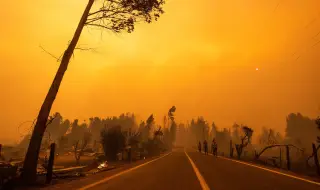
It is this drought that creates favorable conditions for forest fires in regions affected by El Niño. "The soil dries out and the plants die," says Toenike. She explains that there have been many fires in the Amazon region in recent years. And in Indonesia - for example on the island of Borneo - there are large areas of tropical forests that have already burned during past El Niño events. As a result, air quality is deteriorating in a number of other regions in Southeast Asia - for example in large cities such as Singapore or Jakarta. Similarly, in some parts of Africa, such as the Sahel region, the fire season could be prolonged and exacerbated by El Niño.
Experts are also concerned that the current El Niño is occurring at a time when the atmosphere is already warmer. The effects of this climate phenomenon could play a greater role in Europe in the future, says the researcher. This means that the risk of fires is likely to increase in Europe - if the effect of global warming is added to it.
El Niño and global warming
The changed rainfall pattern caused by El Niño can also trigger a cycle, the impact of which is sometimes only apparent years later: for example, more rain appears in regions that are otherwise rather dry: "The vegetation is initially positively affected by the rain and grows very quickly. But the next dry season still occurs, and the new plants dry up and become new combustible material for possible fires. With a certain delay of one to two years, this can lead to new large forest fires," says climatologist Tonike. It is a vicious cycle, because the more forests are burned, the more carbon dioxide is released into the atmosphere. This in turn accelerates global warming - and in the long term increases the risk of new extreme fires.
Author: Alina Schreiber ARD