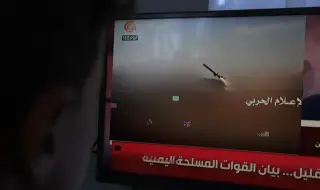
New tensions are building in the Middle East after the Yemeni army attacked positions of the Iran-backed Houthis, while in Turkey the parliament took an important step towards the implementation of the peace process with the Kurdistan Workers' Party (PKK). In parallel, the United Arab Emirates reported an Iranian missile attack on a ship of the state-owned energy company ADNOC in the Strait of Hormuz.
According to UAE data, the ship was attacked on Saturday while passing through the strategic Strait of Hormuz. Authorities in Abu Dhabi said the missile was launched by Iran as part of a series of strikes against commercial shipping. No one was injured in the specific incident. ADNOC said more than a dozen of its vessels had been attacked with missiles and drones since the start of the war with Iran in February.
At the same time, the Yemeni army has struck Houthi positions and military capabilities on several fronts. According to its spokesman, Colonel Majed al-Nazili, the actions were in response to recent attacks by the rebels in the central and eastern parts of the country.
This is considered a serious escalation, as a 2022 ceasefire had largely limited large-scale fighting in Yemen. The civil war pits the Iran-backed Houthis against the internationally recognized government, which is backed by a Saudi-led coalition.
The UN special envoy for Yemen, Hans Grundberg, has warned that the country faces the greatest risk of a resumption of full-scale conflict since a UN-brokered ceasefire in April 2022.
Along with the tensions in Yemen, Turkey has taken an important step in the process of settling its long-standing conflict with the PKK. A parliamentary committee has approved a bill that provides for a mechanism similar to a conditional amnesty for thousands of former fighters.
The bill sets out procedures for the disarmament of the organization and the reintegration of some of its members. It is planned to temporarily suspend some sentences for PKK membership and postpone certain court proceedings. The measures can come into effect after Turkey's National Security Council confirms that the organization has indeed disbanded and handed over its weapons.
The PKK announced last year that it would disarm and disband as part of a peace initiative aimed at ending its decades-long conflict with the Turkish state. Tens of thousands of people have died in clashes since the 1980s, and the violence has repeatedly spilled over into neighboring areas of Iraq and Syria. Turkey, the United States and the EU designate the PKK as a terrorist organization.