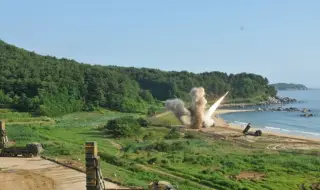
Ukrainian long-range strikes are penetrating deeper into Russia than ever before. Kiev hopes that this campaign will undermine the morale of Russians, but there is a danger that it will play into the hands of hardliners who are calling on Russian President Vladimir Putin not to freeze the conflict but to escalate it, writes The Times.
It is noted that the technical success of the Ukrainian campaign is not in doubt. At the height of the campaign, the strikes disabled more than a third of all Russian oil refining capacity.
Attacks on ships in the Sea of Azov, which resulted in 236 ships being hit in July alone, have severely curtailed commercial shipping on this vital waterway. Traffic has fallen by about three-quarters.
Ukraine has recently shifted its focus to attacks on buildings belonging to the company Wildberries. More than a dozen of the company’s large warehouses and logistics centers have been targeted, damaging or destroying about 20 percent of its total storage capacity.
Since most of the goods were stored for traders – from private entrepreneurs to large companies – the losses were widespread. According to one estimate, the total losses to date amount to over 280 billion rubles.
"Hopes that large-scale attacks will be able to paralyze the Russian economy seem unfounded. Oil and gas revenues have increased thanks to the ongoing crisis in the Persian Gulf. Although core revenues have fallen by about a fifth since the beginning of the campaign, the indicators are currently stabilizing. Similarly, the Wildberries company is promising limited compensation to sellers, while seeking to move warehouses to safer premises in neighboring Kazakhstan," the article states.
Importantly, Ukraine has limited supplies of drones and missiles. It was forced to reallocate resources intended for the campaign against oil refineries to Wildberries targets, which allowed the Russians to repair the facilities. The long lines for gasoline that so alarmed the Kremlin last month are now shrinking or have disappeared.
"But this is a political, not just an economic, campaign aimed at bringing the war closer to Russians. That has undoubtedly happened: the attacks have been on the front pages of newspapers for most of last month," the journalists wrote.
According to data from the "Levada" polling company, last month the share of Russians who think the war is going well has fallen to a record low - 50 percent, which is 19 percentage points less than at the same time last year. At the same time, only 28 percent said they think the war is going badly. The rest were not sure.
The pollsters also noted a decline in Putin's personal approval rating. It remains artificially high due to the lack of any significant opposition, but has nevertheless fallen to 74 percent - the lowest level since his invasion of Ukraine.
It is noted that discontent is also growing among Russians, directed not so much at Putin as at Ukraine. Although the majority declares itself in favor of freezing the conflict and starting negotiations, there is also a significant minority that believes that, since it has already come to this, aggression against Ukraine should be intensified.
"The growing number of victims among the civilian population of Russia plays into the hands of hard-liners. The new willingness of Russian state media to publish information about the victims in the country indicates an attempt to convince its own people that they are the victims".
"Putin's goal is to legitimize the war and any future escalation. His initial, implicit promise was that Russians would not be forced into the war unless they volunteered. He then tried to present his "special military operation" as an existential necessity. Despite a massive propaganda campaign, this line never worked. The new cynical approach, based on revenge, may prove more effective in bolstering support for the regime and justifying unpopular measures, such as the mobilization of reservists to fill the current shortage of recruits.
Russia is responding with fire. The port complex of Greater Odessa has been hit repeatedly, halting most shipping in the area.
With Ukraine having used up its entire stockpile of Patriot missiles needed to intercept Russian ballistic and hypersonic missiles, there are fears that as winter approaches, Moscow will resume its campaign against energy infrastructure, which is already operating at less than a third of its pre-war capacity.