Russian President Vladimir Putin yesterday undertook his first visit to the disputed Kuril Islands, which Japan also claims. This caused a sharp reaction from the Japanese government, BTA reported.
Great Britain
Japan strongly condemned Putin's visit to the disputed Kuril Islands, the British newspaper "Guardian" wrote in the headline.
The Japanese government reacted angrily to Vladimir Putin's first visit to the disputed Kuril Islands, which are claimed by both Tokyo and Moscow.
Japanese Foreign Minister Toshimitsu Motegi summoned Russian Ambassador Nikolai Nozdrev, and Prime Minister Sanae Takaichi described Putin's actions as "absolutely unacceptable".
Known in Japan as the "Northern Territories" and in Russia as the "Southern Kurils", the islands were seized by the then Soviet Union in the final days of World War II and have been the subject of disputes.
The Soviet Union declared war on Japan in August 1945, when Tokyo was about to surrender, and the dispute prevented the two countries from signing a formal peace treaty, the Guardian notes.
Takaichi said the islands were "both historically and under international law" part of Japan and described the Russian leader's visit as "incompatible with Japan's consistent position" regarding these territories.
Japanese television broadcast footage of Putin's visit to Etorofu Island, or Iturup in Russian, where he visited a school and a hospital, met with locals and tasted caviar at a processing plant.
In addition to its strategic importance, the island chain, consisting of Etorofu, Kunashiri, Shikotan and the Habomai group of islands, provides access to rich fishing grounds and valuable mineral deposits, the British publication said.
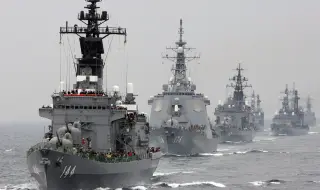
On Wednesday, Putin visited the nearby Russian island of Sakhalin, where he inspected naval exercises and said that the four disputed islands were recognized as Russian in international documents.
The late Japanese Prime Minister Shinzo Abe had reached an agreement with Putin on the territories issue, as a result of which visits by Japanese citizens to family graves were resumed and negotiations for a future peace treaty began. However, Russia's invasion of Ukraine in 2022 prompted Japan to impose sanctions on individuals and organizations linked to Moscow, which has soured bilateral relations.
In a statement on Wednesday, the Russian president praised Abe's actions and described the sanctions imposed by Japan as "unfounded."
"Japan has identified Russia as the main source of threat. I would like to emphasize that we do not threaten Japan. On the contrary, it has territorial claims to our country," Putin said.
Although this is Putin's first visit to the islands, Dmitry Medvedev visited Kunashiri in 2010, when he was president. Medvedev was widely seen as loyal to Putin, who was prime minister at the time, the Guardian notes.
France
After Putin's visit to the Kuril Islands, Russia rejected "unfounded" criticism from Japan and condemned its "revisionism", the French newspaper Le Figaro reported in a headline.
"We categorically reject these statements, which we consider politically inappropriate, offensive and, of course, legally unfounded", Russian Foreign Ministry spokeswoman Maria Zakharova said in a statement.
Condemning the "anti-Russian policy bordering on hostility" from Tokyo, Zakharova stressed that the Kuril Islands "were handed over to (Russia) after the end of World War II, in accordance with the agreements with the Allied powers and the UN Charter".
"Russia's sovereignty and jurisdiction over these islands are indisputable", the spokeswoman stressed, reproaching Japanese leaders for "impudently allowing themselves to determine […] which regions in their own country the Russian president can or cannot visit."
"Almost 81 years after Japan signed the act of unconditional surrender in September 1945, Tokyo is once again obsessed with revisionist statements aimed at justifying its aggression in Asia and making absurd claims against Russia," Zakharova added. She also criticized Japan for its support for Ukraine and for imposing sanctions against Moscow, following the example of the West, after the beginning of the Russian invasion of that country, notes "Figaro".