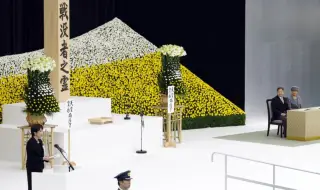
Japanese Prime Minister Sanae Takaichi skipped the controversial Yasukuni Shrine in Tokyo on August 15, when Japan marked the 81st anniversary of its surrender in World War II. The decision was seen as an attempt to avoid further worsening relations with China and South Korea, where visits by Japanese politicians to the shrine have provoked strong reactions.
In her speech on the anniversary, Takaichi honored the victims of Hiroshima, Nagasaki and Okinawa, as well as Japanese soldiers who died on the front lines. She said Japan would not allow the tragedy of war to be repeated, but did not mention Japan's war crimes in Asia or apologize.
The Yasukuni Shrine honors about 2.5 million Japanese military dead, including 14 people convicted of war crimes of the highest category since World War II. This is what makes visits by Japanese ministers and prime ministers there a sensitive diplomatic issue for Beijing and Seoul.
China and South Korea view such visits as a sign of insufficient critical attitude towards the Japanese occupation and war crimes of the first half of the 20th century.
Despite the prime minister's absence, Japanese Defense Minister Shinjiro Koizumi visited “Yasukuni“ on August 15. He was accompanied by another cabinet member and three senior representatives of the ruling Liberal Democratic Party.
Koizumi's visit is particularly sensitive because he leads the department at a time when the Takaichi government is pushing to increase the country's military capacity and expand arms exports.
The previous Japanese defense minister who visited “Yasukuni“ on the anniversary of the surrender, was Minoru Kihara in 2024.
The Chinese Foreign Ministry officially protested against the visits. Beijing accused Japanese politicians of trying to downplay war crimes and rewrite historical facts with their actions. The Chinese side called on Tokyo to make a clear distinction with its militaristic past.
Tensions between Japan and China had already been raised after Takaichi said that a possible Chinese attack on Taiwan could be seen as a threat to Japan's survival and lead to the use of force by Tokyo.
South Korean President Lee Jae-myeon reacted more restrained. He stressed the importance of pragmatic diplomacy and said that cooperation between Seoul and Tokyo was more important than ever.
At the same time, he pointed out that improving bilateral relations should not ignore people who are still bear the pain of historical events.
Although he did not appear at the shrine, three senior representatives of the ruling party made a cash donation on behalf of Takaichi as party leader.
The prime minister has not visited “Yasukuni“ since taking office, but has already sent donations twice during the shrine's traditional festivals.
Unlike the prime minister, Emperor Naruhito included a clear message in his speech about the need for Japan to remember the past. He said the country must reflect on its history and maintain a sense of “deep regret“ so that the suffering of war is not repeated.
Japanese emperors have not visited “Yasukuni“ since 1978, when the shrine enshrined 14 convicted war criminals.
The controversy surrounding “Yasukuni“ shows that more than eight decades after the end of World War II, historical memory continues to directly influence relations between Japan, China and South Korea.
Takaichi's decision to skip the visit reduces the immediate diplomatic risk, but the presence of the defense minister and the lack of an apology in the prime minister's speech show that the topic remains sensitive both in Japan's domestic politics and in its relations with its neighbors.