Air raid sirens, drone interceptions, fires, fuel in the water and gasoline queues – all of this has become part of the summer vacation for many Russians. The Black Sea coast is one of the most popular summer destinations in the country, but it also hosts refineries and tanker terminals, making it a regular target for Ukrainian strikes.
Ukrainian military officials say they are only attacking Russia's military and energy infrastructure. According to them, drones that fall in civilian areas were shot down by air defense or electronic warfare before reaching their targets, the Financial Times notes, quoted by Focus.
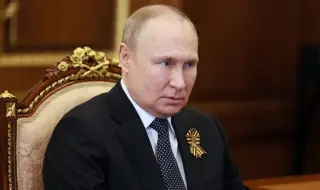
Due to drones in the sky and oil spills in the water, the number of tourists has dropped by 10.8% compared to last year, according to data from Dmitry Bogdanov, chairman of AMOS - the association of hoteliers in southern Russia. The danger also seems to have repelled the region's most famous vacationer - Russian President Vladimir Putin, who has an official residence in Sochi, as well as a luxurious palace for personal use near Gelendzhik.
The article states that Putin visited Sochi 24 times in 2021 - the last year before the full-scale invasion of Ukraine, but only twice in 2024 and 2025, according to data from the Kremlin website. He last appeared in public in Sochi in October last year, and has since confined himself mostly to Moscow, St. Petersburg and his residence on Lake Valdai in northern Russia.
In the run-up to parliamentary elections next month, Putin has increased his visits to the regions, but most of them have been east of the Urals – out of range of Ukrainian drones. Yet ordinary Russians continue to arrive. Beaches and seaside cafes along the Black Sea coast remain packed – a fact that underscores the extent to which everyday life and war are increasingly intertwined in Russia, now in its fifth year of conflict.
A manager from Voronezh, for example, arrived in Sochi in June with his daughter. Worried about water pollution and drone attacks, they avoid the sea and swim only in the hotel pool. The journey is far from ideal, but Alexei has little choice: his employer is now classified as part of the military-industrial complex and, like more and more Russians, he is banned from leaving the country.
A captain of a tourist boat in Arkhipo-Osipovka told the FT that before the tragic incident on the beach this month, “the sirens almost never went off,” while now they wail “several times a day.” Holidaymakers on the beach seem mostly indifferent – few seek shelter when the alarms go off.
A guesthouse owner in Kabardinka – another Black Sea resort in Krasnodar Krai – says summer bookings are holding steady at last year’s level, with some guests “not even asking how things are.” Even after the Arkhipo-Osipovka beach crash, she has seen just two cancellations.