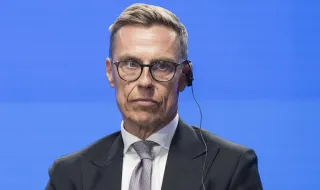
Finnish President Alexander Stubb believes that Europe should seek contact with the Kremlin and maintain a political dialogue with Moscow despite Russia's ongoing hybrid attacks. Stubb said this in an interview with the German newspaper Bild, Focus reports.
„I think someone in Europe should resume dialogue with Russia to understand what is happening there. We need to talk to each other at a political level“, the Finnish president said.
Stubb: Silence creates misconceptions in Moscow
According to Stubb, the main risk of the lack of political contacts is that Moscow will create „illusions“ about what is happening in Europe.
According to him, this can lead to erroneous assessments on the Russian side and the perception of non-existent threats as real.
“Dialogue is necessary“, Stubb emphasized, stating that Europe must maintain the possibility of political communication with Russia.
Finnish President Welcomes CIA Director's Visit to Moscow
Stubb also described CIA Director John Ratcliffe's unexpected visit to Moscow this week as a positive fact.
“I think that's good. I really think so. "I believe that dialogue is necessary," he said.
The Finnish president added that he would also welcome maintaining contacts between the US and Russian militaries.
"I hope that the US military is also negotiating with the Russian military," Stubb said, defining it as correct that the US and Russia maintain contact "in different formats."
According to various media reports, Ratcliffe discussed in Moscow the possibilities of limiting the further escalation of the war in Ukraine and attempts to resume peace talks.
Stubb does not expect a Russian attack on NATO
In the interview, the Finnish president also expressed another important assessment of relations between Russia and the West.
Stubb said that he does not believe in a scenario in which Russia would decide to attack NATO.
At the same time, he stressed the need to maintain political and military channels of communication to limit the risks of miscalculations and unwanted escalation between Russia and Western countries.