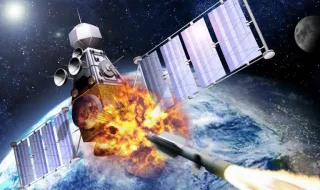
There is still time to prevent an arms race in space by drafting a legally binding international treaty to ban the deployment of weapons there. This was stated by Deputy Foreign Minister Sergei Ryabkov, who called on the United States and other countries to abandon their skepticism about the idea, reported "Reuters".
His comment comes in the wake of this week's US admission that the Pentagon is operating weapons in Earth orbit - a key moment in the militarization of space. The commander of the US Space Forces, Douglas Shees, said that servicemen of his branch of the armed forces "operate orbit-based weapons capable of protecting the Joint Forces from attacks carried out using space assets".
Today, Ryabkov - during a press conference in Moscow - noted that the US had not notified Russia of its new weapons capabilities, but added that Washington's statement was not a surprise.
"This is nothing new for us. We are monitoring all this, documenting it and drawing the appropriate conclusions", he stressed, noting that Moscow has long spoken about the need for a treaty that would exclude the use of force in space or the threat of force against objects in space.
In his words, "the Americans and other Western countries, and in particular the British, have been using provocative pretexts for years to cover up their reluctance to take steps in this direction. "They are looking for untenable arguments to avoid this and are trying to turn things around by accusing us of actions that they believe are destabilizing," the deputy minister pointed out.
But he added that Russia believes that "it is not yet too late to create an environment that would prevent an arms race with a growing risk of open conflict in outer space."