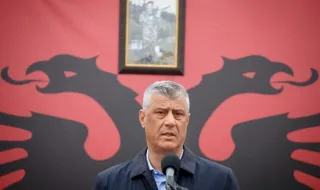
Former Kosovo President Hashim Thaci has been convicted of war crimes committed during the Kosovo war in the late 1990s. Three other leaders of the former KLA were also convicted. They are widely regarded as heroes in Kosovo.
Today, September 16, the Special Tribunal for Kosovo in The Hague delivered its verdict in the case against former Kosovo President Hashim Thaci. He was sentenced to 25 years in prison - on four counts of war crimes committed during the war with Serbia in the late 1990s. The tribunal found Thaci guilty of the murder of 96 political opponents and individuals considered collaborators with Serbian security forces.
In Kosovo, they are national heroes
The 58-year-old Thaci, who resigned from office almost six years ago to stand trial, was charged with multiple war crimes and crimes against humanity, including murder, torture and persecution, along with three other leaders of the former Kosovo Liberation Army (KLA) - Kadri Veseli, Rexhep Selimi and Yakup Krasniqi, who fought against Serbian forces in the 1998-1999 war. They are considered national heroes in their homeland. Thaci is also facing a separate trial on charges of witness intimidation, which is set to begin later this month.
Thousands of people gathered in Pristina last weekend in support of the four Thaci, Selimi, Veseli and Krasniqi. Protesters filled the capital's main square, many carrying Albanian flags.
Portraits of the four former KLA fighters were plastered across the city, along with a giant digital clock counting down the time until Wednesday's verdicts. "In the name of the people, declare them innocent," read one banner.
The Kosovo War and Independence
The majority of the 13,000 people who died in the Kosovo war were ethnic Albanians. A 78-day campaign of NATO airstrikes against Serbian forces ended the fighting. About 1 million ethnic Albanian Kosovars were driven from their homes.
In 2008, Kosovo declared independence from Serbia - a move that Belgrade refuses to recognize. Relations between Kosovo and Serbia remain tense - despite years of negotiations brokered by the European Union and supported by the United States.