Gasoline price cap, corporate profit tax, fuel discount? Chancellor Friedrich Merz has announced that the government is preparing measures to ease the burden on drivers. What can be expected?
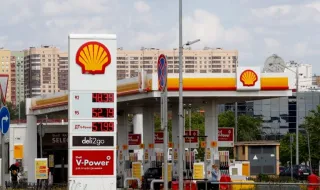
Once a day, at 12 noon, gas stations in Germany are allowed to raise fuel prices. On the morning of September 15, E 10 gasoline in Berlin cost around 2.25 euros per liter, and diesel fuel – 2.37 euros. After prices rose by about 20 cents per liter at noon, the most expensive Super Plus gasoline exceeded the 3 euro per liter mark at some gas stations.
Drivers are unhappy. While in large cities it is possible to use public transport, residents of rural areas have almost no realistic alternative to the car. Residents of border regions are in a more advantageous position. For example, a 60-liter tank of gasoline costs about 30 euros less in the neighboring Czech Republic and Poland, about 28 euros less in Luxembourg and 25 euros less in Austria, according to data from the Federal Statistical Office. Of the nine countries that Germany borders, gasoline is significantly cheaper in seven, and diesel in six of them. Only in the Netherlands and Denmark do drivers fill up with more expensive fuel than in Germany.
But relief is clearly on the way. Chancellor Friedrich Merz admitted that "for many people who are forced to use a car every day, the limit of endurance has been reached." He therefore announced that the government would respond to the situation. However, the specific measures are still to be specified, he specified.
Mineral concerns are making huge profits
According to a government spokesman in Berlin, the high prices are largely due to the worsening situation in the Middle East, attacks on oil pipelines and the blockade of sea routes.
However, it is also a fact that Germany imposes high taxes and fees on fuels. The ADAC automobile club also notes that the price of oil is still below its previous peak, but E10 gasoline is more expensive than ever.
Herbert Rabl from the Association of Gas Stations (TIV) points out one of the reasons: "There are simply big profits to be made. "Mining companies are not giving up any of their profit margins," he told the Rheinische Post newspaper. This issue has long been discussed in political circles, but there is no consensus in the German government on what can be done about it.
No prospect of a new discount on fuel prices
The conservative parties CDU/CSU and the Social Democrats are currently in government together. The problem is that the state treasury is empty and the coalition can only finance the federal budget through new debts, which are already at record highs. “The way to lower these prices again is linked to the cessation of hostilities and the guarantee of free sea navigation in particular”, said deputy government spokesman Steffen Meyer.
Against the backdrop of rising oil prices due to the war in Iran, the German government has temporarily reduced (from May 1 to June 30, 2026) the tax on gasoline and diesel, which fell by around 17 cents per liter during these two months.
According to Economy Minister Katharina Reiche, there is currently no possibility of new price reductions. Instead, the Christian Democratic Union is considering the possibility of tax relief for people traveling to work and direct payments intended for people on low incomes.
However, for the Social Democrats, this is not enough – They propose a completely different approach: they are campaigning for a cap on fuel prices. Such a measure could be financed by a tax on excess profits for energy companies. The party also supports a temporary reduction in energy taxes in crisis situations. The aim is to reduce prices at gas stations immediately.
The proposals of the "Alternative for Germany"
While the federal government is still hesitating about what to do, new elections are coming up. This Sunday (September 20) two more federal states will hold state elections. In Mecklenburg-Western Pomerania, Prime Minister Manuela Schwesig of the Social Democratic Party wants to prevent the far-right populists of the "Alternative for Germany" (AfD) from winning the elections. The party, which has been described in part as "proven right-wing extremist" party leads with 38 percent in attitudes, while support for the Social Democrats is around 34 percent.
The AfD wants to significantly reduce fuel prices by abolishing the CO₂ tax on them and lowering energy taxes to the lowest levels in Europe. The party also proposes reducing VAT on petrol and diesel from 19 percent to 7 percent.
“There is a possibility, like Luxembourg, of introducing a fuel price cap and at the same time a tax on excess profits”, Schwesig believes. The Prime Minister of Mecklenburg-Western Pomerania criticizes the federal government's inaction: “The Chancellor is leaving things unchanged, and this is causing discontent”, she warned.